


Let me tell you about Eli Musk.
He runs a mid sized furniture store in Los Angeles. Last year, a friend told him Facebook Ads could 10x his business, so he decided to try it. He spent $2,500 over three months. He boosted posts, ran carousel ads, and targeted people interested in furniture across the entire city.
What did he get? 12,000 likes, 47 comments saying “nice” and just 6 actual sales.
The problem wasn’t Facebook Ads. The problem was he had no idea what he was doing. No strategy, no targeting clarity, no proper funnel.
And this isn’t rare. This is exactly how most businesses end up wasting money on ads.
72% of small businesses say they’ve wasted money on digital ads that didn’t deliver results. The problem isn’t the platform. It’s the approach.
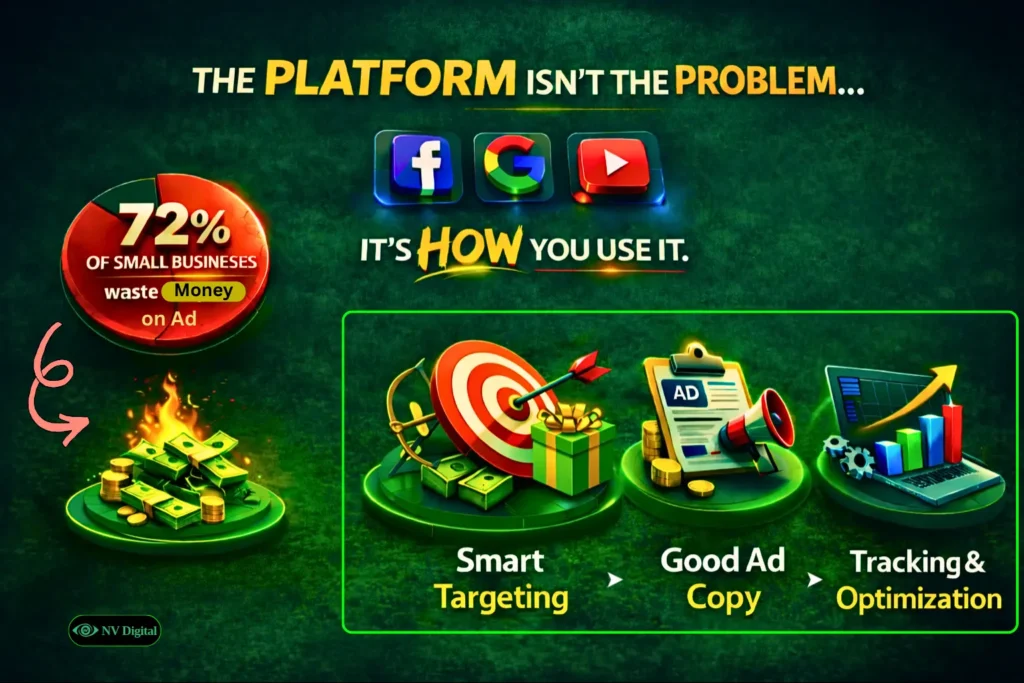
This blog is for business owners who have spent money on ads and wondered where it all went. We’ll explain the real reasons ads fail, using simple examples and clear solutions you can actually use.
Table of Contents
1. Running Ads Without a Game Plan
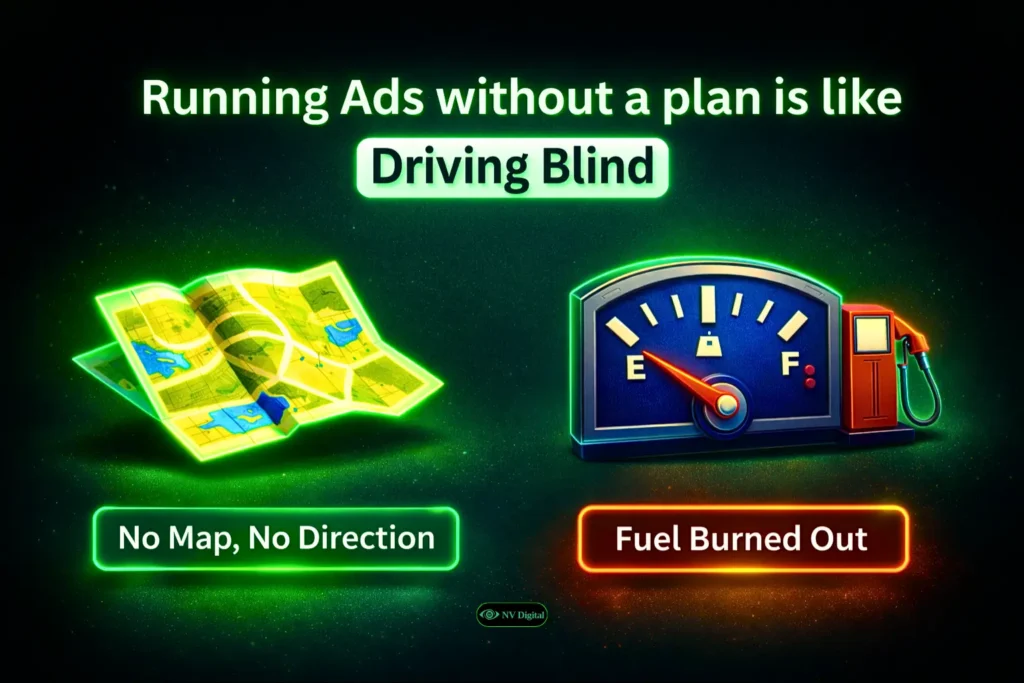
Here’s what most businesses do: they open Google Ads or Facebook Ads Manager, pick a random budget, write some copy, hit publish and pray. That’s not marketing. That’s gambling except casinos at least have better odds. Performance marketing without a strategy is like driving to a new city without Google Maps. You’ll burn fuel, take wrong turns and end up somewhere you never wanted to be.
Real Life Example:
A new gym in New York City spent $600 on Instagram ads targeting fitness lovers aged 18 to 65 across the whole city. The ad got thousands of views, but only 10 people visited the gym. Why? The gym was in Manhattan, but most people who saw the ad were in Brooklyn, about 15 km away. No one wants to travel that far for a gym. If they had spent $180 targeting people within 3 km who are interested in gym memberships, they would have gotten much better results.
The mistake isn’t spending money. It’s spending money without answering three basic questions
1. Who exactly am I trying to reach?
2. What do I want them to do?
3. How will I know if it worked?
What to do instead:
Before you spend any money, clearly write who your target audience is, what your goal is (leads, calls, or sales choose one) and how you will track results. Keep it to one page. This simple step already puts you ahead of most businesses running ads.
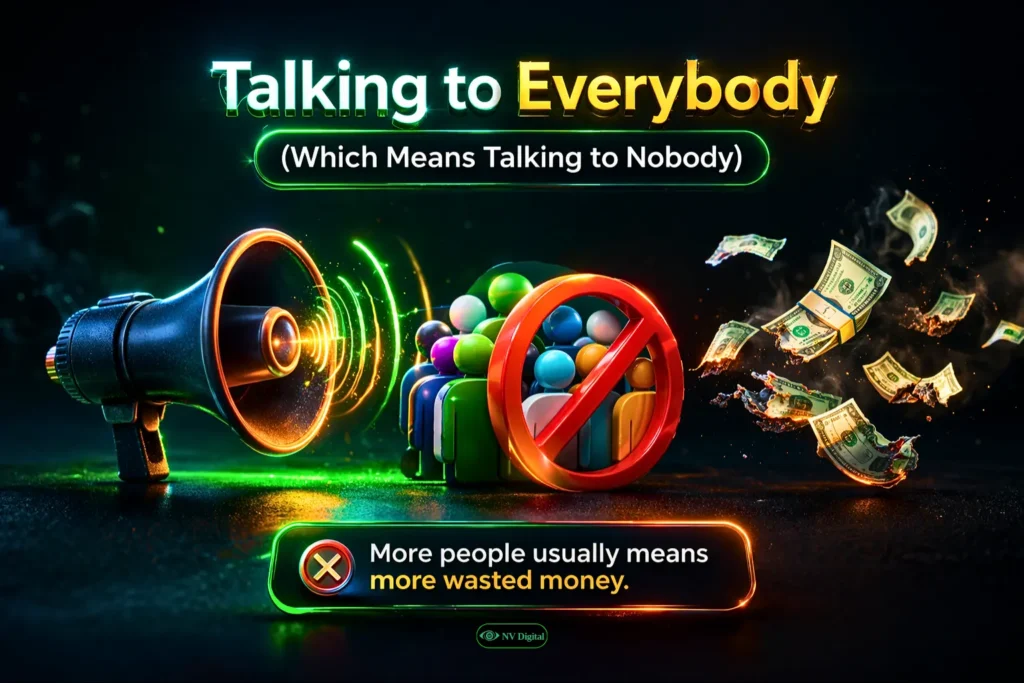
2. Talking to Everybody (Which Means Talking to Nobody)
When people spend money on ads, they often think showing it to more people will bring more customers. That’s not true. More people usually means more wasted money.
Real Life Example:
A premium skincare brand showed ads to women aged 18 to 50 across the United States. Most clicks came from people aged 18 to 22. They liked the product and looked at it, but didn’t buy because it was too expensive for them.
Then the brand changed its target to women aged 28 to 45 who are interested in luxury beauty products. After this, sales increased a lot and the cost to get each customer dropped by 60%.
Who you target matters a lot. If you show the right product to the wrong people, you won’t get sales.
What to do Instead:
Write a short description of your ideal customer. Include their age, location, income, what they care about and their problems.
Create ads that feel like they are made just for that one person. Start with a small, focused audience. You can always expand later, but once money is wasted, you can’t get it back.
3. Chasing Likes Instead of Money
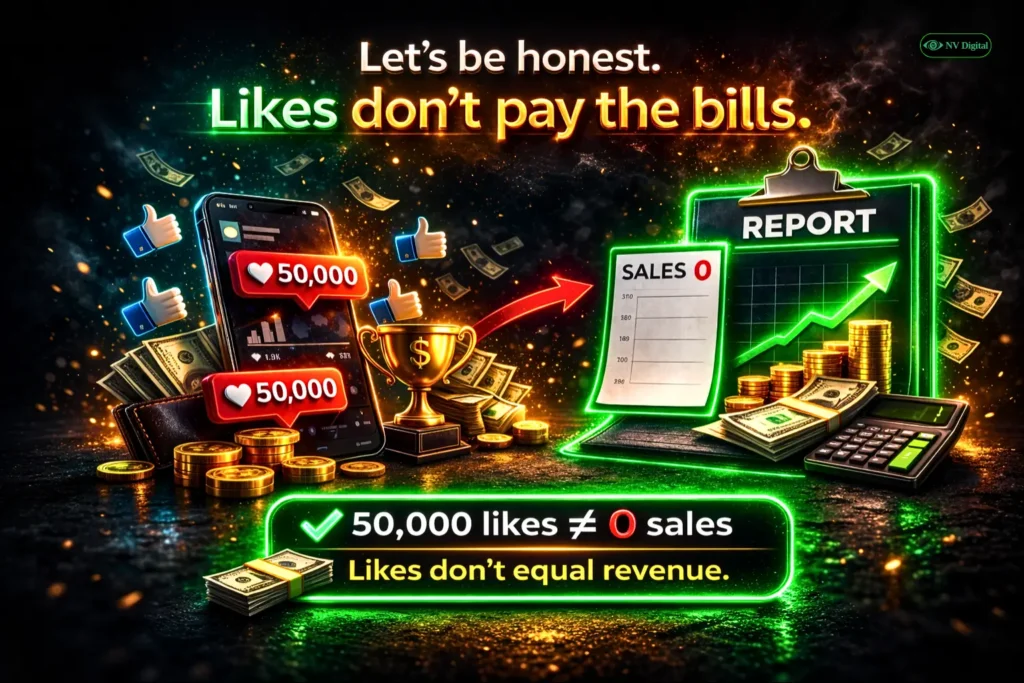
Let’s be honest. Likes don’t pay the bills.
A post with 50,000 likes and zero sales hasn’t helped your business at all. But many businesses and even agencies still celebrate likes, reach, and followers like they matter most. These are vanity metrics. They look good, but they don’t drive real results.
If your marketing report doesn’t clearly show how much money you made, it’s not a real report. It’s just a story.
Real Scenario:
A clothing brand’s reel went viral with 2 million views and 50,000 likes. The team celebrated. Then they checked sales and found only 4 orders.
The content was entertaining, but it attracted people who wanted to watch, not buy. There was no clear product focus, no call to action and no buying intent.
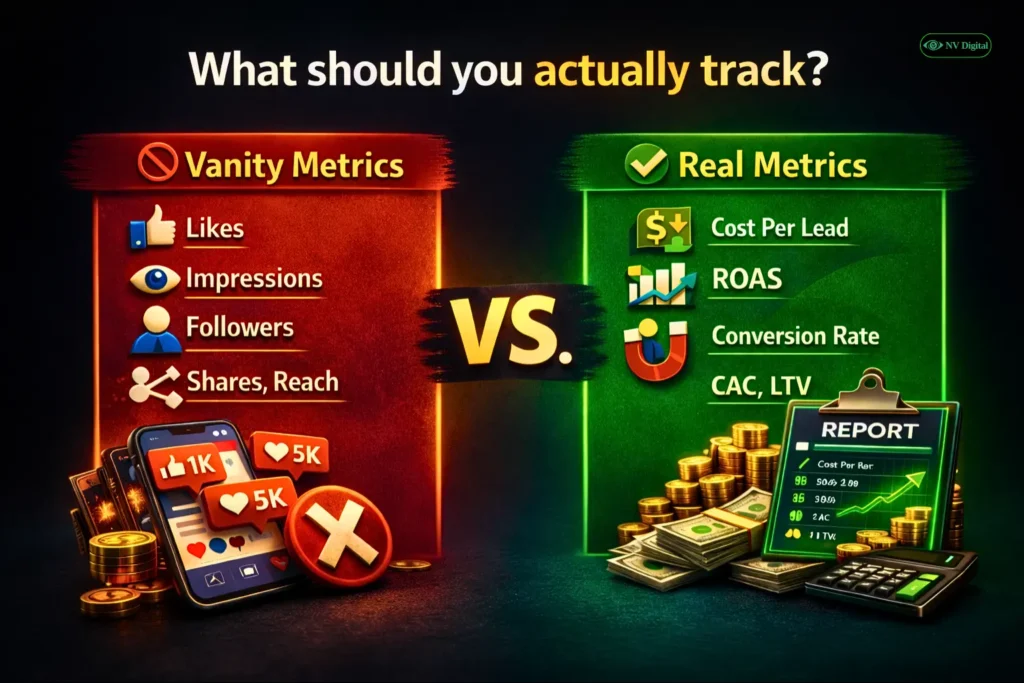
What should you actually track?
🚫 Vanity metrics
Likes, impressions, followers, shares, reach
✅ Real metrics
Cost per lead, ROAS, conversion rate, CAC, LTV
Cost Per Lead (CPL): How much you pay to get a lead (phone number or email)
Customer Acquisition Cost (CAC): How much it costs to get one paying customer
Return on Ad Spend (ROAS): How much revenue you earn for every ₹1 spent
Lifetime Value (LTV): Total value a customer brings over time
What to do Instead:
Every campaign report should answer one simple question: Did we make more money than we spent?
If your agency can’t give a clear answer, you’re working with the wrong one.
4. Sending People to a Terrible Landing Page
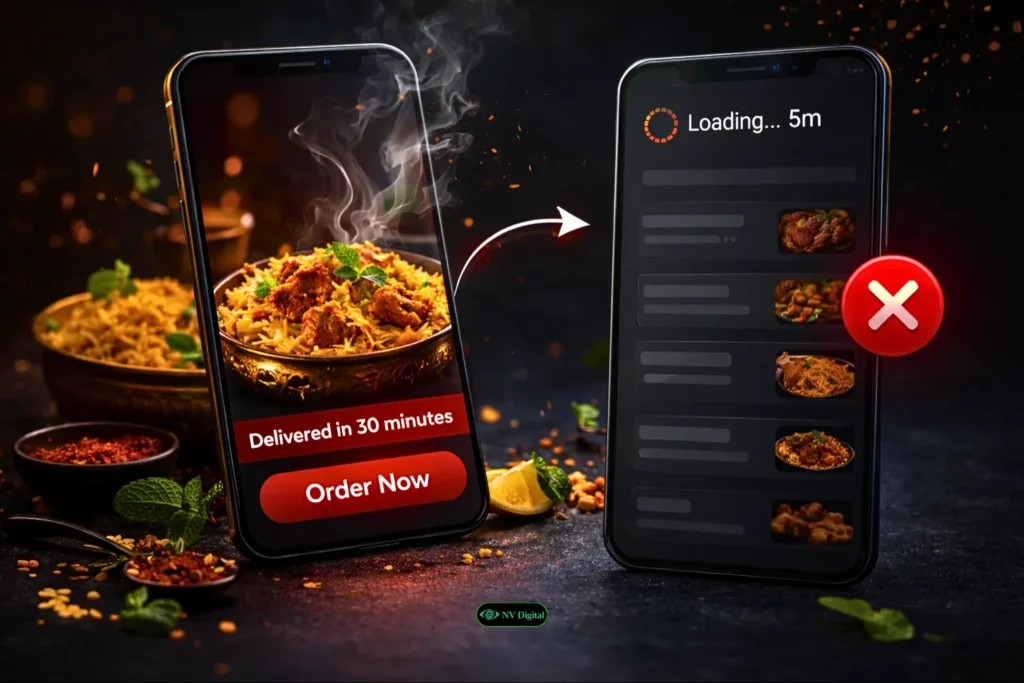
Imagine this. You see an amazing ad for a restaurant with a perfectly shot biryani and the caption says ‘Order now, delivered in 30 minutes.’ You tap the ad and land on the restaurant’s homepage. There are many menu items, no biryani in sight, no clear order button and the page takes 7 seconds to load.
You leave. Most people do.
Your landing page is your online salesperson. If it is slow, confusing and cannot guide people to buy, your ad money is wasted.
Real Scenario:
A real estate company spent $2,500 per month on Google Ads for “2 bedroom apartments in Los Angeles.” People clicked, but landed on a website showing properties in multiple cities. Finding the Los Angeles listing took several clicks, so most left within 10 seconds.
They then created a landing page only for the Los Angeles property with pricing, floor plans, a virtual tour and one enquiry form. Leads increased 4 times.
Keep it simple. Your landing page should load fast, match the ad, have one clear action and work well on mobile.
What to do Instead:
Do not send ad traffic to your homepage. Create one focused landing page for each campaign with one message and one action. Test it on your phone before running ads.
5. Treating Every Stranger Like a Ready Buyer
If someone has never heard of your brand and the first thing they see is a “Buy now, 50% off” ad, they will ignore it. Why would anyone buy from a brand they just discovered?
People don’t buy instantly. They go through stages. If you push a sales ad too early, you waste money on people who are not ready.
The three stages every customer goes through:
Stage 1 → Awareness
They don’t know you yet. Use simple, helpful, or interesting content to get attention. Not discounts.
Stage 2 → Consideration
They are comparing options. Show reviews, examples, demos and proof that your product works.
Stage 3 → Decision
They are ready to buy. This is where offers, strong calls to action and retargeting ads work best.
Real scenario:
A SaaS company showed the same “Buy now, 50% off” ad to everyone. Cold audiences ignored it.
Then they changed the approach. They showed simple videos explaining the problem to new people, testimonials to interested users, and offers to people who had already visited the site. Conversions increased by 200% without spending more.What to do Instead:
Plan your customer journey. Create different ads for each stage. If someone watched your video, show them proof next, not the same video again. Build a funnel, not noise.
0 Comments