

In 2008, three founders in San Francisco were struggling to pay rent. They placed a few air mattresses in their apartment and charged strangers $80 a night to stay. They called it AirBed & Breakfast. At the time, the idea sounded strange. Investors were not interested, and hotels did not see it as a threat.
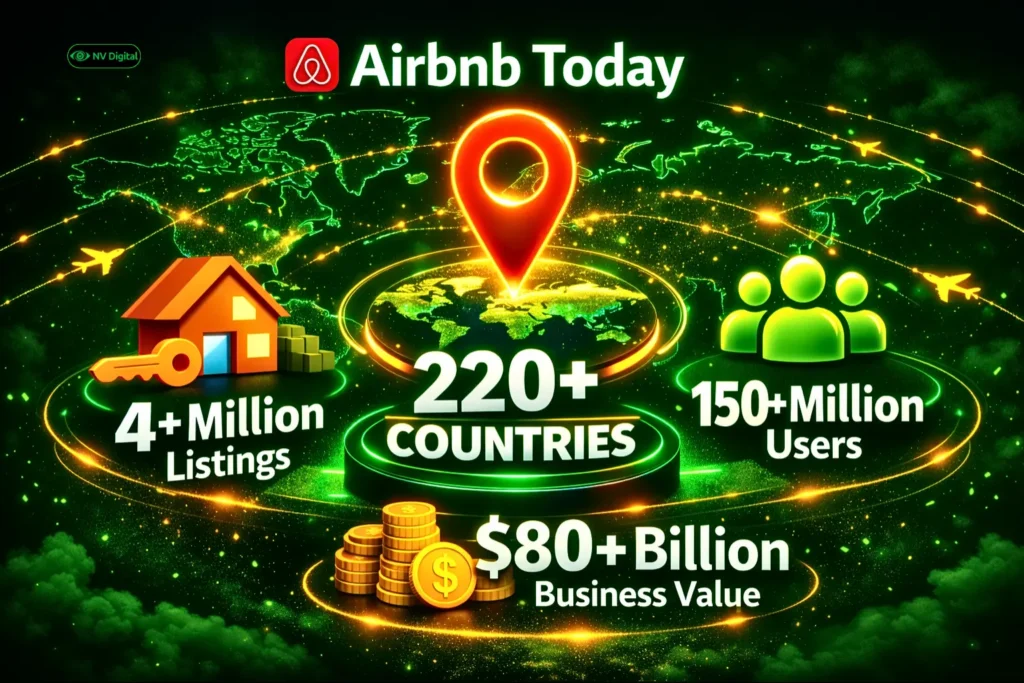
Today, Airbnb operates in more than 220 countries, has over 4 million listings, and serves more than 150 million users. The company has grown into a business worth over $80 billion and has changed how people think about travel and accommodation.
So how did a simple idea like renting out an air mattress turn into a global company? More importantly, how did they convince millions of people to host strangers in their homes and travelers to trust those spaces?
The answer is their marketing strategy. Airbnb focused on building trust, community, and smart growth tactics that helped the platform expand quickly.
In this article, we will look at the key marketing strategies Airbnb used, why they worked, and what lessons businesses can learn from them.
Table of Contents
Quick Summary: Airbnb’s Core Marketing Strategies at a Glance
| Strategy | What Airbnb Did | Key Result |
|---|---|---|
| Quick Ways to Grow on Craigslist | Cross-posted listings to Craigslist to tap into its massive user base | Built early supply and demand without paid ads |
| Professional Photography | Sent professional photographers door-to-door to shoot listings | Doubled revenue in New York; 2–3x more bookings on photographed listings |
| Referral Program | Rewarded both referrers and referred users with travel credits | Drove 900% annual growth in first-time bookings |
| Community & Trust Building | Verified profiles, reviews, $1M host guarantee, 24/7 support | Overcame the “stranger danger” barrier and built global trust |
| User-Generated Content | Turned guest photos and host stories into marketing assets | Scalable, authentic content that outperformed corporate ads |
| Belong Anywhere Campaign | Shifted brand identity from “cheap stays” to “meaningful travel” | Created emotional brand loyalty beyond price competition |
| Content & SEO | Published travel guides, blogs and a print magazine (Pineapple) | Dominated organic search and established thought leadership |
| Brand Over Performance Ads | Shifted budget from paid search to long-term brand marketing | Reduced ad dependency while maintaining growth |
1. The Craigslist Hack: Using Someone Else’s Audience
Startups often face the chicken and egg problem: you need users to attract more users, but you have none at the start. Airbnb solved this in a very creative way.
What They Did
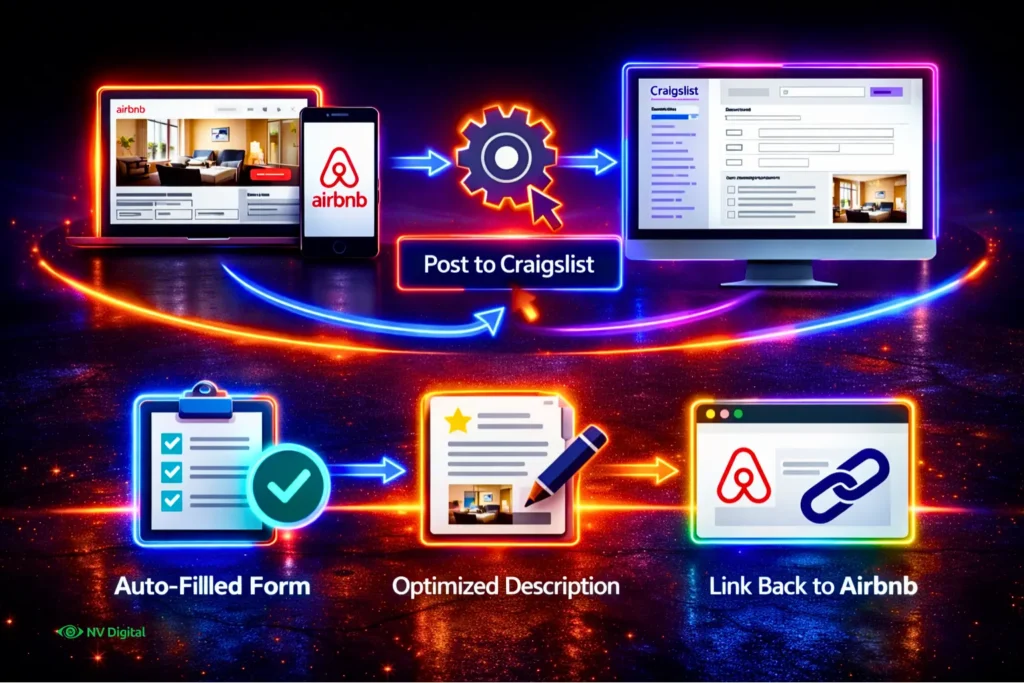
Airbnb noticed people looking for short-term rentals were already on Craigslist. Instead of building an audience from scratch, they created a tool that let hosts post their Airbnb listings to Craigslist in one click. The tool auto-filled forms, added polished descriptions and included a link back to Airbnb.
They also reached out to people already posting on Craigslist, inviting them to list on Airbnb for better-looking listings, safer payments and access to a growing traveler community.
Why It Worked
Airbnb didn’t force people to change behavior, they made it easier to do what users were already doing, but better.
Takeaway: Don’t start from zero. Find where your customers already spend time on a subreddit, Facebook group, marketplace or even a competitor and go there.
2. Professional Photography: Fix the Real Problem
In 2009, Airbnb was growing slowly. Brian Chesky realized the issue: listings had bad photos. Grainy, poorly lit images made it hard for guests to see what they were paying for, so bookings were low.
What They Did
The founders rented a $5,000 camera and went door-to-door in New York, taking professional photos of listings. Bookings doubled and revenue jumped within a month. Seeing the impact, Airbnb launched a free photography program for hosts everywhere.
Why It Worked
Airbnb didn’t need more traffic or ads, they fixed the key barrier stopping people from booking – photo quality.
Lesson: Growth often comes from removing the one thing blocking your users, not from adding more marketing.
3. The Referral Program: Turn Users Into Your Sales Team
Word of mouth is the most trusted marketing and Airbnb made it work intentionally.
What They Did
Airbnb created a referral program that rewarded both sides: invite a friend and they get a travel credit and you get a credit when they book. The rewards were meaningful enough to encourage sharing. After testing and optimizing, the program drove 900% growth in first-time bookings.
Why It Worked
People shared because it felt helpful, not like marketing. Airbnb turned happy customers into active promoters.
Lesson: Design referral programs that reward both parties, make the incentive relevant and keep testing for the best flow.
4. Building Trust
Airbnb faced a big challenge: convincing people it was safe to stay in a stranger’s home or host strangers themselves. In 2008, many investors thought it was too risky.
What They Did
They tackled trust on all fronts: verified host profiles, two-way reviews, secure payments, $1 million host guarantee, 24/7 support, identity checks and clear cancellation policies. They also shared real stories of hosts and guests, showing successful businesses, meaningful connections and community benefits.
Why It Worked
Trust is essential for any marketplace. Airbnb knew no ad could replace the feeling of safety. By building systems, policies and stories that reassured users, they made people comfortable enough to take the leap.
Lesson: If your product depends on trust, make it a priority. Reviews, guarantees, verification, social proof and transparent policies aren’t optional, they’re your foundation.
5. User-Generated Content
Airbnb understood that the most convincing marketing comes from users, not the company.
What They Did
They encouraged guests to share photos and stories from their stays and featured these on social channels instead of stock images. Skilled photographers were invited to capture their best shots. Campaigns focused on meaningful travel moments created by real users. On the host side, they highlighted stories of people turning spare rooms into income, showing everyday hosts becoming micro-entrepreneurs.
Why It Worked
User-generated content is authentic. A guest photo proves the experience is real, unlike a polished corporate ad. UGC allowed Airbnb to scale content without extra production costs and connected better with audiences.
Lesson: Encourage customers to share their experiences. Highlight their content and make them part of your brand. It’s more authentic, cost-effective and impactful than anything you produce yourself.
6. The “Belong Anywhere” Campaign
Early on, Airbnb was seen as a cheaper alternative to hotels, but competing on price only goes so far.
What They Did
In 2014, Airbnb started the “Belong Anywhere” campaign. They changed their logo and said people should “live like a local” instead of just “booking a room.” Their ads showed real experiences, making friends, exploring culture and feeling at home anywhere. In 2015, the “The Experience is Everything” campaign kept the same idea
Why It Worked
People buy how a product makes them feel, not just the product itself. By centering on belonging and connection, Airbnb built emotional loyalty that couldn’t be beaten by cheaper alternatives. They stopped competing on accommodations and owned meaningful travel.
Lesson: Market how your product makes people feel, not just what it does. Build your brand around its emotional core.
7. Content Marketing & SEO
Airbnb didn’t rely only on ads, they built content that attracts and educates travelers
What They Did
They published blogs, travel guides, hosting tips and destination lists covering the full travel journey. Their internal linking boosted search rankings. They also launched Pineapple magazine with real travel stories and strong photography and posted YouTube videos featuring hosts, destinations and brand stories.
Why It Worked
Content keeps working long after it’s published, unlike ads that stop delivering when you stop paying. Airbnb invested in content that provides lasting value and organic traffic.
Lesson: Make content that genuinely helps your audience, answers their questions and guides their journey. Optimize for search and be patient, results grow over time.
8. From Paid Ads to Brand Marketing
Airbnb chose to spend less on paid ads and focus more on building its brand.
What They Did
After years of heavy Google and Facebook ads, they noticed traffic didn’t drop much when spending less. People started coming directly, searching “Airbnb” instead of generic terms. They redirected budgets to TV campaigns, events, partnerships and creator collaborations efforts that built recognition and trust rather than immediate clicks.
Why It Worked
Paid ads stop working the moment you stop spending. Brand marketing builds long-term value, reduces acquisition costs and keeps customers coming back.
Lesson: Don’t rely only on performance ads. Invest in your brand, it pays off over time and makes marketing cheaper, not more expensive.
9. Experiential and Community Marketing
Airbnb didn’t rely only on online ads, they connected with people in the real world.
What They Did
In new markets, they hosted meetups, community events and partnered with local brands and tourism boards. They recruited hosts through in-person outreach in smaller towns. They also created attention-grabbing experiences, like themed stays in iconic locations, which generated media coverage and social buzz.
Why It Worked
Offline and community marketing turns people into advocates. When people feel part of something, they share it for free. Airbnb’s events and experiences created press, social shares and cultural relevance without heavy ad spending.
Lesson: Show up where your customers are. Create shareable experiences. Make your audience tell your story for you.
10. Email Marketing
Airbnb’s email marketing quietly drives consistent revenue.
What They Did
They send personalized emails to re-engage users, inspire trips and encourage repeat bookings. Emails feature destination ideas, listings based on past searches, seasonal travel tips and special offers. For hosts, they include performance tips, pricing advice and community updates. Every email prompts a specific action.
Why It Worked
Email delivers high ROI when it’s relevant and personalized. Airbnb uses it to stay top of mind without annoying users, treating email as a relationship tool rather than just a broadcast.
Lesson: Build and segment your email list. Personalize messages and give people a reason to open your emails, whether it’s inspiration, deals or useful tips.
Key Lessons from Airbnb’s Marketing
Go to where your audience already is and meet them there instead of waiting for them to find you. Fix the obstacles that stop people from converting before focusing on bringing in more traffic.
Turn your customers into your marketing team with referrals, user-generated content and community engagement. Build trust through reviews, guarantees and transparency because people buy from brands they believe in.
Focus on feelings, not features, because emotional branding creates loyalty that price alone cannot beat. Invest in content and SEO so your traffic keeps growing over time. Strengthen your brand to lower growth costs and make marketing more efficient.
Show up in the real world with events, partnerships and community activities to turn customers into advocates. Test everything because small tweaks can make a huge difference. Always think long-term because sustained efforts compound into real results.
Frequently Asked Questions
What is Airbnb’s primary marketing strategy?
Airbnb’s marketing strategy centers on community-led growth, trust building and emotional storytelling. They rely heavily on user-generated content, referral programs and brand campaigns that position them as a platform for meaningful travel, not just cheap accommodation.
How did Airbnb grow so fast in the early days?
Airbnb’s early growth came from a combination of scrappy tactics: the Craigslist cross-posting hack to build supply and demand, professional photography to improve conversions and targeting events (like Obama’s 2008 Democratic National Convention) to get their first bookings. They also leveraged a referral program that drove 900% annual growth in first-time bookings.
What is the Craigslist hack Airbnb used?
Airbnb built a tool that allowed hosts to cross-post their Airbnb listings to Craigslist automatically. This put Airbnb in front of Craigslist’s massive audience of people already looking for short-term rentals, funneling traffic back to Airbnb’s superior platform.
How does Airbnb use user-generated content?
Airbnb features real guest photos and host stories across their social media channels, website and marketing campaigns. Instead of relying on polished corporate content, they let their community tell the story, which is cheaper, more authentic and more persuasive.
Can small businesses apply Airbnb’s marketing strategies?
Absolutely. The core principles going where your audience is, building trust, leveraging referrals, creating genuine content and investing in brand apply to businesses of any size. You don’t need Airbnb’s budget. You need their mindset: be scrappy, be authentic, and always put the customer experience first.
Why did Airbnb move away from paid ads?
Airbnb found that their brand had become strong enough that people searched for them directly. Cutting back on performance marketing didn’t significantly hurt traffic, so they shifted budget to brand campaigns that build long-term equity rather than short-term clicks.
Conclusion: What Airbnb Teaches Us About Marketing
Airbnb didn’t reach $80 billion by having more money or better technology. They succeeded because they understood people. Marketing isn’t about shouting louder, it’s about making people feel something, building trust and creating experiences worth sharing.
Every move, from the Craigslist hack to the Belong Anywhere campaign, focused on understanding what people want, what they fear and what would make them tell a friend.
You don’t need to copy Airbnb’s tactics, but you should follow their principles: go where your audience is, remove friction, build trust, tell real stories and invest in your brand.
The best marketing doesn’t feel like marketing. It feels like someone genuinely helping you find what you were looking for. That’s what Airbnb figured out and that’s why staying in strangers’ homes became an $80 billion business.
0 Comments