

If you run an online business, you might have this question. Should I use Google Ads or Meta Ads?
Many business owners struggle with two main concerns:
- Google Ads can be expensive, especially when the cost per click keeps increasing.
- Meta Ads can bring low-quality leads, which makes conversions harder.
Both platforms can work well, but they serve different purposes.
The important thing is choosing the one that fits your goal. If you choose the wrong platform, you may spend money without getting good results.
In this guide, you’ll learn when to use Google Ads, when Meta Ads works better and how to choose the right platform in 2026.
Table of Contents
What Is Google Ads?
Google Ads is an advertising platform where businesses show ads to people actively searching for something on Google Search, YouTube and other websites in the Google network.
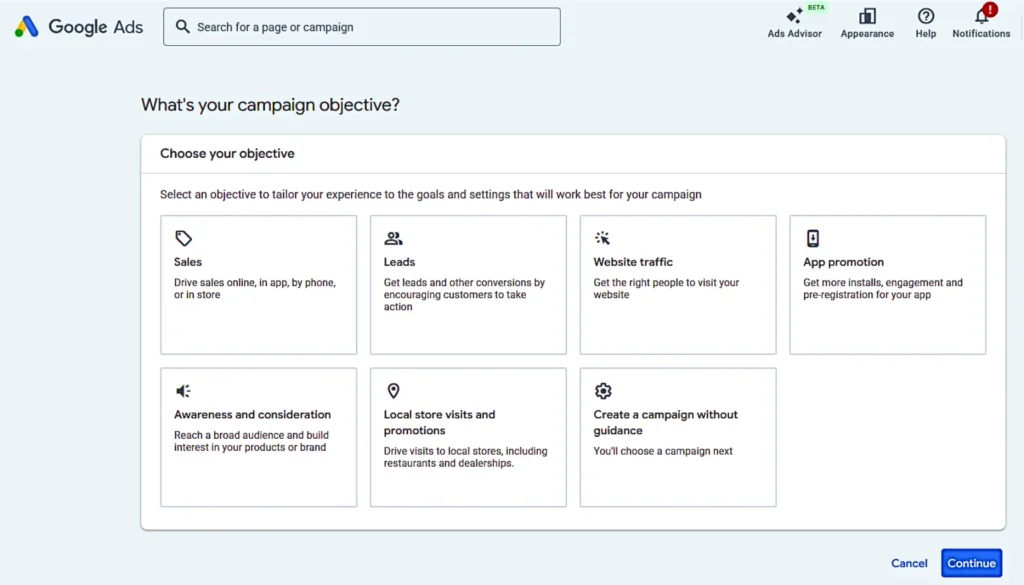
Example:
Someone searches: “best digital marketing course near me”
Your ad appears at the top of search results. That means the user already has intent to buy or learn.
Why Businesses Use Google Ads
Google Ads works well because it targets people who are already searching for something. When someone searches on Google, they’re usually looking for ⬇️
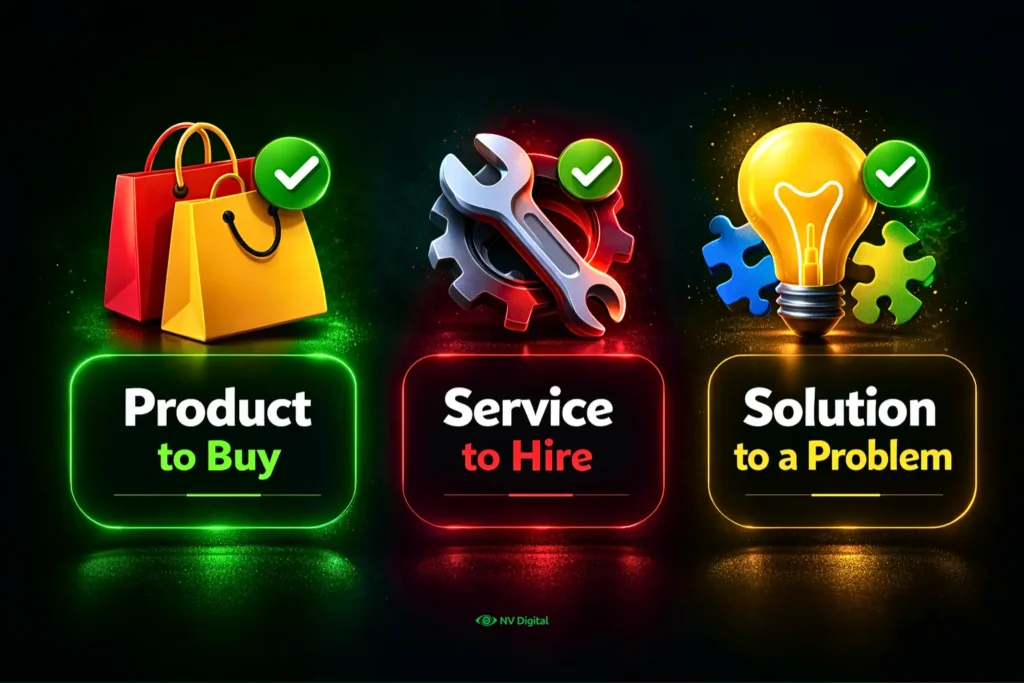
Because of this, Google Ads can bring faster conversions, especially for businesses that want quick results.
Pros of Google Ads
People who search on Google usually want to buy something or find a service. This makes Google Ads useful for getting customers quickly. It works well for local services and urgent needs like repair services. When campaigns are managed properly, it can also give a strong return on investment.
Cons of Google Ads
Cost per click can be high in competitive industries. It also needs the right keyword strategy to perform well. If campaigns are not managed properly, the budget can be spent very quickly.
What Is Meta Ads?
Meta Ads is the platform used to run ads on Facebook, Instagram and Messenger.
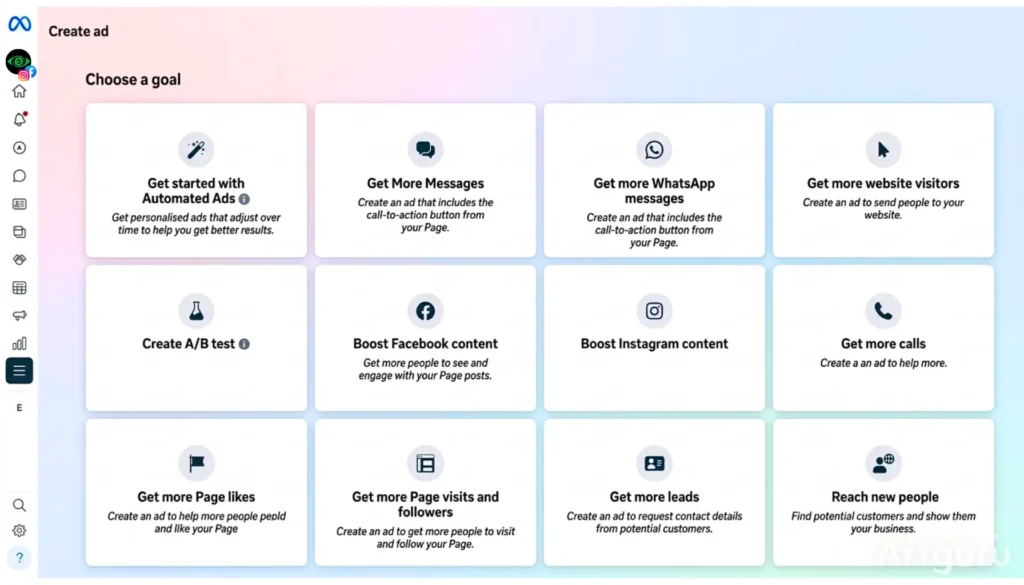
Unlike Google Ads, people here are not searching for products. They are usually just scrolling through content. Your ad appears in their feed and grabs their attention.
For example, someone scrolling Instagram might suddenly see an ad saying “50% off running shoes today.” They may not have planned to buy shoes, but the ad can create interest.
Why Businesses Use Meta Ads
Meta Ads focus on audience targeting. You can show ads based on factors like age, location, interests, behavior and online activity.
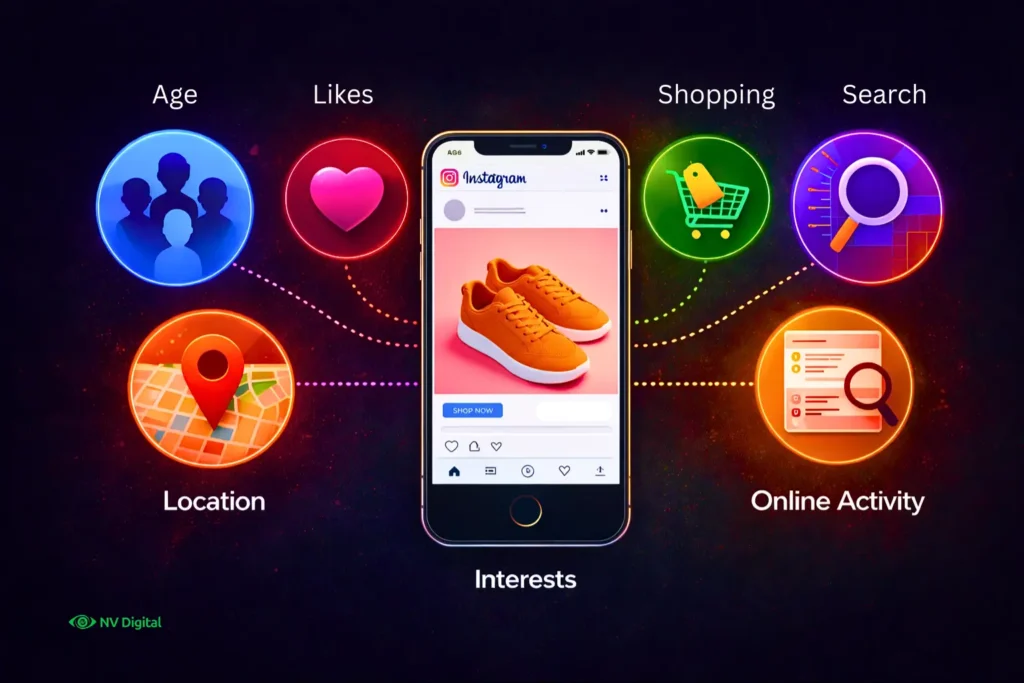
This helps businesses reach new potential customers who may be interested in their products.
Pros of Meta Ads
Meta Ads allow you to target specific audiences based on their interests, behavior, and demographics. The cost per click is usually lower compared to search ads. They also work well for visual content like images and videos, which helps in building brand awareness.
Cons of Meta Ads
People on Meta platforms usually have lower buying intent because they are just scrolling. It also requires strong creatives like good images or videos to perform well. In addition, algorithm changes can impact ad performance.
The Core Difference (Most People Don’t Understand This)
The biggest difference between the two platforms is intent.
| Factor | Google Ads | Meta Ads |
|---|---|---|
| User mindset | Searching for a solution | Browsing content |
| Intent level | High | Low to medium |
| Best for | Direct sales | Brand discovery |
| Ad type | Keyword based | Audience based |
| Cost | Usually higher | Usually lower |
Think of it like this:
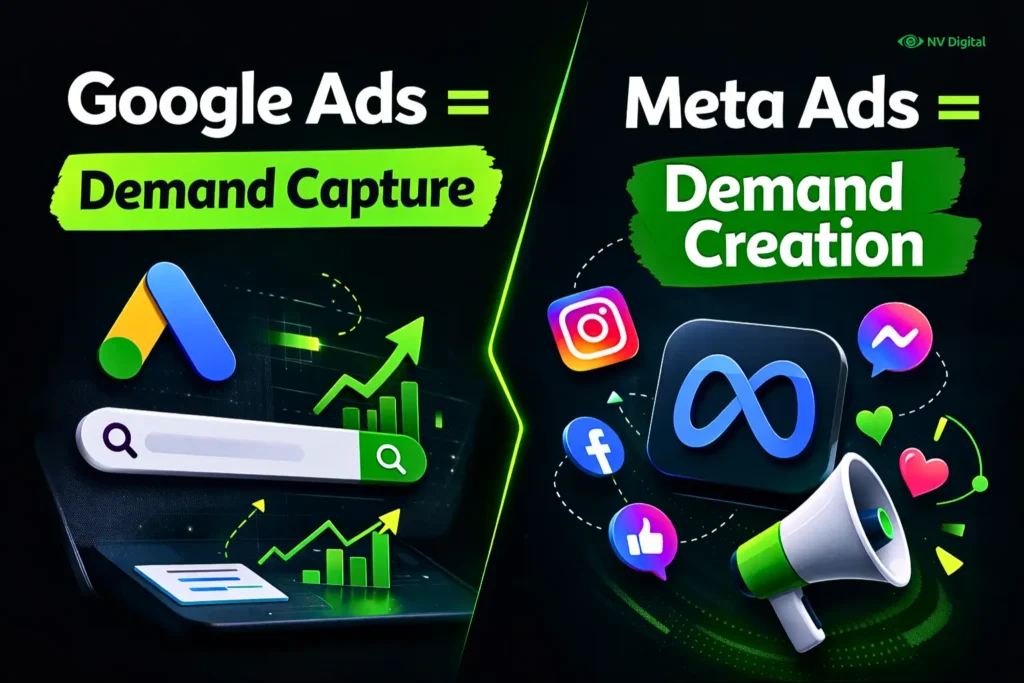
When Google Ads Is the Better Choice
Google Ads works best when people are already searching for a service or solution.
It is especially useful for businesses like local services, emergency services, professional services, B2B companies and high-intent purchases.
For example, people might search for (plumber near me, best CRM software or digital marketing agency.)
In these situations, Google Ads often converts faster because the demand already exists.
When Meta Ads Works Better
Meta Ads work best when you need to create interest first.
This is common for products like fashion, beauty items, online courses, lifestyle products and mobile apps.
People are not searching for these. They usually discover them while scrolling. So visual ads and good creatives matter more than search intent. A strong ad can catch attention and make people curious about the product.
Cost Comparison (2026 Reality)
Costs depend on industry, competition and targeting. But in general:
| Platform | Average Cost Per Click |
|---|---|
| Google Ads | $1 – $10+` |
| Meta Ads | $0.20 – $3 |
Google Ads usually costs more because you’re reaching people who are already searching for a solution. Meta Ads are typically cheaper since you’re targeting people based on interests while they’re browsing, not actively looking to buy.
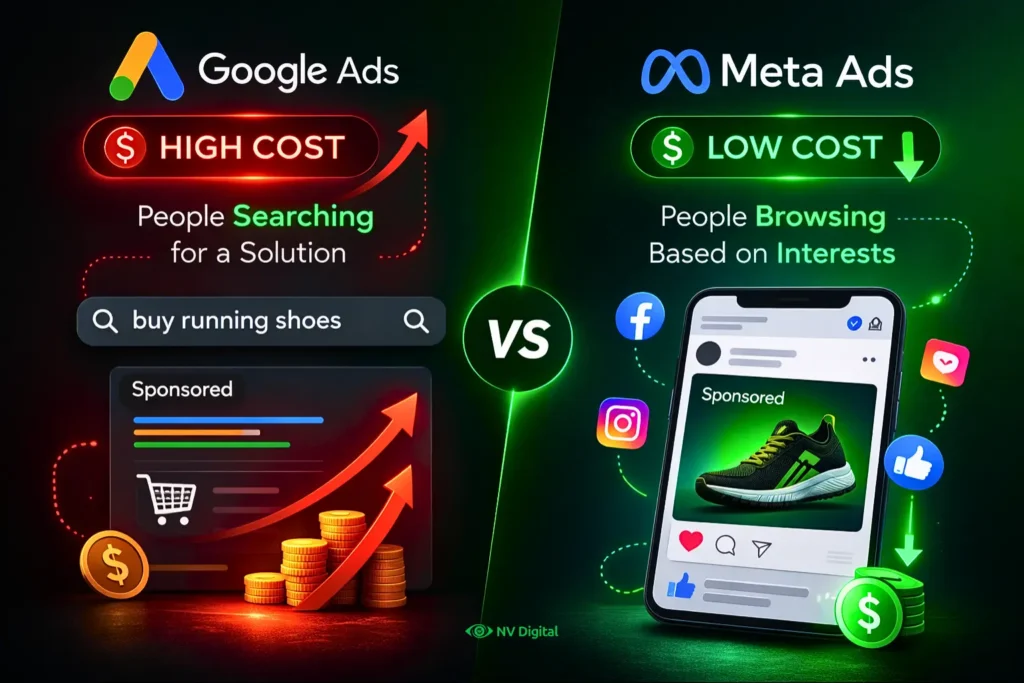
But a lower cost per click doesn’t automatically mean better results or more sales.
The Smart Strategy in 2026 (Use Both)
The best-performing businesses don’t rely on just one platform. They use both together.
Step 1: Use Meta Ads to create awareness
Run engaging ads that highlight your product benefits, brand story or special offers. This helps introduce your brand to new audiences on platforms like Facebook and Instagram.
Step 2: Use Google Ads to capture demand
Later, when those people search for your product or brand on Google Search, your ads appear. This way, Meta Ads create interest and Google Ads convert that interest into action. Together, they build a complete marketing funnel.
Example Marketing Funnel
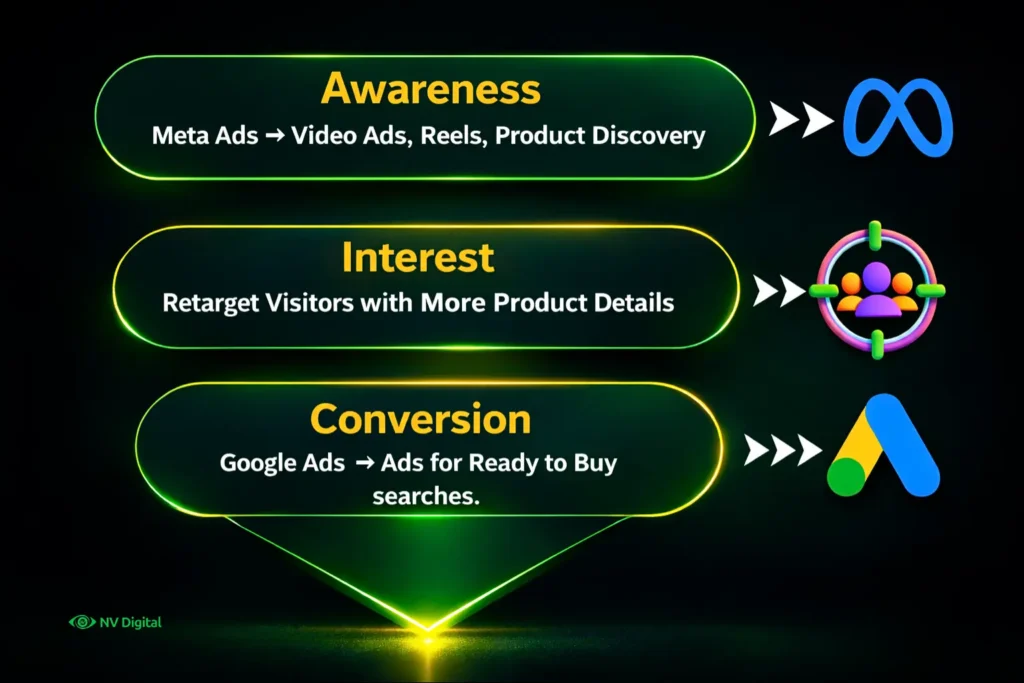
Start with Meta ads to create awareness using videos, reels or product-focused content. Then retarget people who showed interest and share more product details. Finally, use Google search ads to reach users who are actively searching and ready to buy. This funnel approach usually delivers better ROI.
Common Mistakes Businesses Make
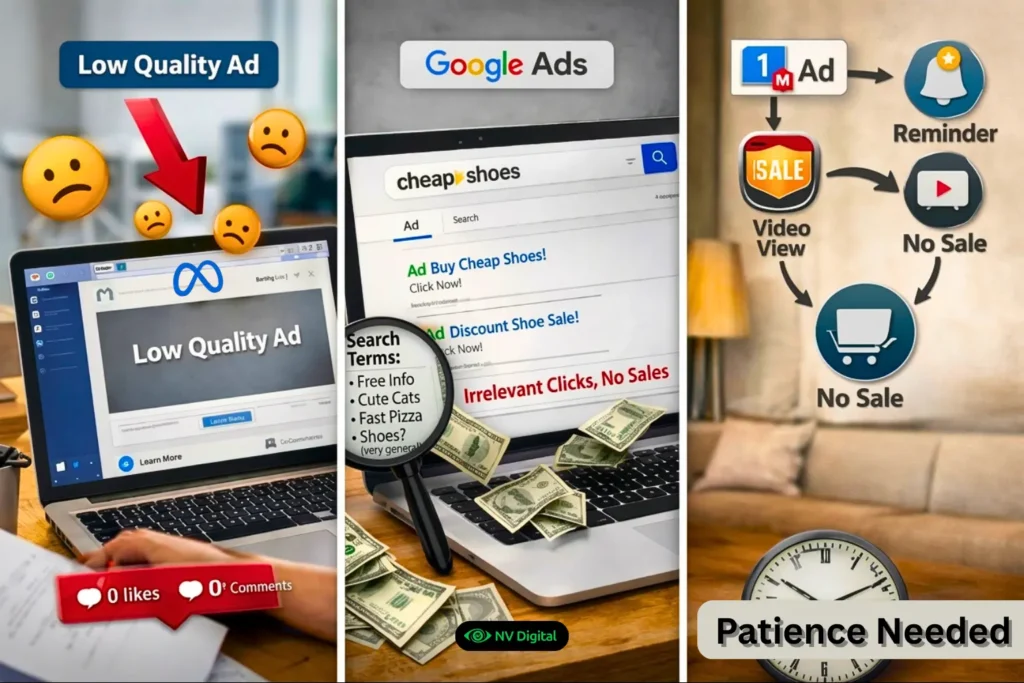
Many businesses waste ad budget by making a few common mistakes. Running Meta Ads without strong visuals usually leads to poor performance because the platform relies heavily on eye-catching creatives.
Running Google Ads without proper keyword research can also drain your budget since you may end up paying for irrelevant clicks. In many cases, businesses get traffic but no actual sales or leads, which usually happens because of targeting or landing page issues. If you want to understand why this happens, read our guide on why ads get clicks but no conversions.
Another mistake is expecting instant sales from Meta Ads, even though these campaigns often need multiple touchpoints before people decide to convert.
Quick Decision Guide
If you’re still unsure, use this simple rule.
Choose Google Ads if:
- People actively search for your service
- You want faster conversions
- You run a local or service-based business
Choose Meta Ads if:
- Your product is visually appealing
- You want to build brand awareness
- You’re looking for lower-cost traffic
Use both if:
- You want long-term growth
- You want to scale and dominate your market.
Final Thoughts
It’s not really about choosing between Google Ads and Meta Ads. The real question is which stage of the customer journey you’re targeting. Google Ads captures people who are already searching for a solution, while Meta Ads helps create demand by introducing your brand to new audiences. Businesses that use both platforms strategically usually get better results and stronger returns from their marketing budget.
Frequently Asked Questions
1. Which platform gives better ROI: Google Ads or Meta Ads?
It depends on your goal. Google Ads often delivers higher conversion rates because users are actively searching for a solution. Meta Ads usually cost less and work better for brand awareness and reaching new audiences.
2. Why are Google Ads more expensive than Meta Ads?
Google Ads typically cost more because you’re targeting users who already have buying intent. With Meta Ads, you’re targeting people based on interests while they’re browsing, so the clicks are usually cheaper.
3. Why do Meta Ads sometimes generate low-quality leads?
Meta Ads target interests and behaviors rather than search intent. If the targeting or ad creative isn’t strong, you may attract people who are curious but not ready to buy.
4. Are Google Ads better for small businesses?
Yes, in many cases. Google Ads can work well for small businesses because they reach people actively searching for services like plumbers, dentists, or digital marketing agencies.
5. Why are my Google Ads getting clicks but no conversions?
This usually happens when keywords are too broad, landing pages are weak, or the audience isn’t ready to buy. Proper keyword targeting and a strong landing page are essential.
0 Comments