

Content marketing isn’t just about posting often. It is about building authority that grows over time.
Successful brands don’t only sell their products. They educate, solve problems and guide people before asking for a purchase. That is the goal of a strong content strategy.
Now you can see exactly how it works.
Table of Contents
What is Content Marketing?
Content marketing is about planning and creating helpful, relevant content that reaches the right audience and guides them toward your business goals. Instead of interrupting people with ads, you earn attention by solving real problems.
For example, Google does not run ads to teach SEO basics. Instead, it publishes simple guides on Google Search Central that explain how search works and how to improve rankings. These guides show up in search results on their own and help people learn. That is content marketing in action.
Why Content Marketing Still Works in 2026
Buyer behavior has changed. Before deciding anything, people search, compare options, read reviews and look for clear explanations. That is exactly where useful website content makes a difference.

For example, the article on website maintenance vs redesign by NV Digital explains when a business should update a website and when a full redesign makes more sense. It breaks down practical factors like cost, performance issues, outdated design, and long term goals. Instead of pushing a service immediately, it helps readers understand the problem first.
So when a business owner searches “Should I redesign my website or just maintain it?”, finds that guide and gets clarity, trust starts building. Even months later, the same article can keep bringing visitors who have the same question.
That is how informative content supports decisions and keeps generating traffic over time without depending only on ads.
Types of Content Marketing Strategies
A complete strategy includes multiple content layers.
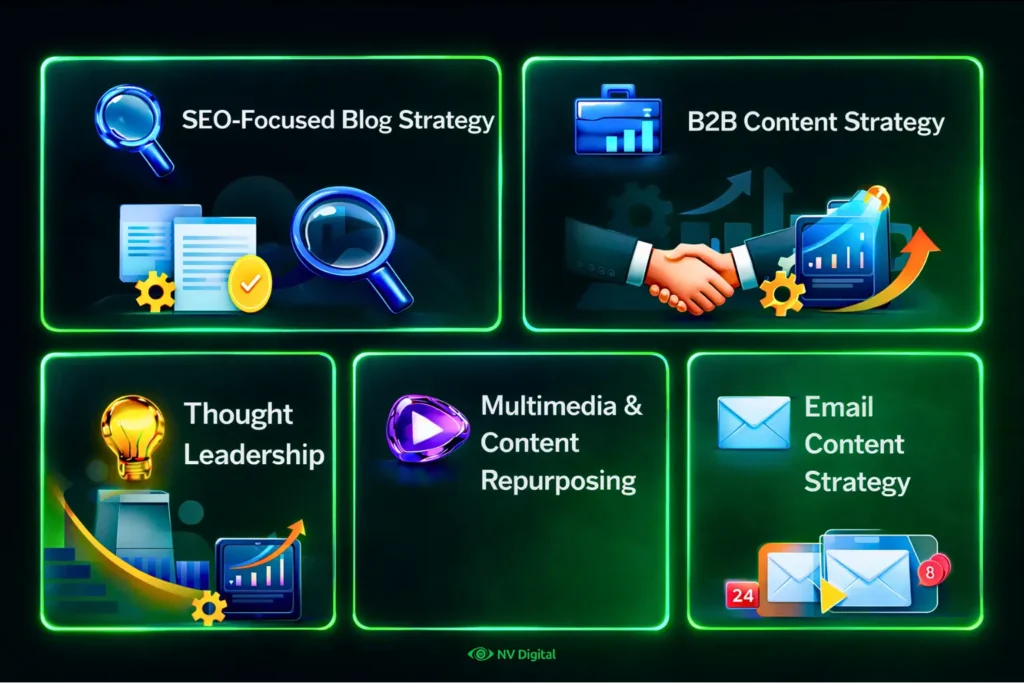
1. SEO-Focused Blog Strategy
A strong content plan usually begins with SEO. If you are not sure what SEO means, you can read our detailed guide on what is SEO? and how it works before continuing.
This means researching the right keywords, understanding what people are actually searching for and creating detailed, well-structured articles around those topics. Using pillar pages and related supporting articles helps organize content clearly.
For example, when someone searches ‘ads getting clicks but no conversions,’ they may find a detailed guide that explains why this happens and how to fix it. Instead of immediately pushing a service, the article first explains common issues like weak landing pages, poor targeting, or unclear offers.
By helping readers understand the problem clearly, the content builds trust and credibility over time.
2. B2B Content Strategy
B2B buyers need clear information and proof before making decisions. Content such as case studies, industry reports, ROI breakdowns and comparison articles helps them evaluate options properly.
For instance, if a SaaS company shares a case study showing how a client reduced operational costs by 25 percent, that directly supports business decision-making.
3. Thought Leadership
Authority grows when useful insights are shared consistently. This can include founder insights, industry forecasts, research-based articles or data analysis.
When companies publish original reports or trend data that others reference, it strengthens credibility and positions them as reliable sources.
4. Multimedia and Content Repurposing
People consume content in different ways. One detailed blog post can be turned into a video, a LinkedIn article, short clips or an infographic. Repurposing content helps reach a wider audience without starting from scratch each time.
5. Email Content Strategy
Getting traffic is not enough if you do not stay connected with your audience. Lead magnets, educational email sequences and regular newsletters help maintain engagement and build long-term relationships.
Step-by-Step Content Marketing Strategy Framework
| Step | Focus Area | What You Should Do | Why It’s Important |
|---|---|---|---|
| Step 1 | Goal Setting | Define what you actually want to achieve, whether it is lead generation, brand authority, enterprise deals or market education. | Clear goals keep your content aligned with business results instead of random publishing. |
| Step 2 | Audience and Buying Journey | Understand your audience’s questions, comparisons, and concerns at each stage of their decision process. | Content performs better when it matches real intent and real problems. |
| Step 3 | Content Planning and Structure | Choose main pillar topics, create supporting articles, plan distribution channels, set a schedule and decide how you will measure success. | Consistency and structure drive stronger results than posting frequently without direction. |
| Step 4 | Distribution Strategy | Promote content through SEO, LinkedIn for B2B, email marketing and selective paid campaigns when necessary. | Content needs active distribution to reach the right audience. |
| Step 5 | Performance Measurement | Track meaningful metrics such as organic traffic, conversion rate, lead quality, revenue impact and cost per acquisition. | Measuring real outcomes helps you improve strategy and avoid chasing vanity metrics. |
Content Marketing Funnel (Awareness → Conversion)
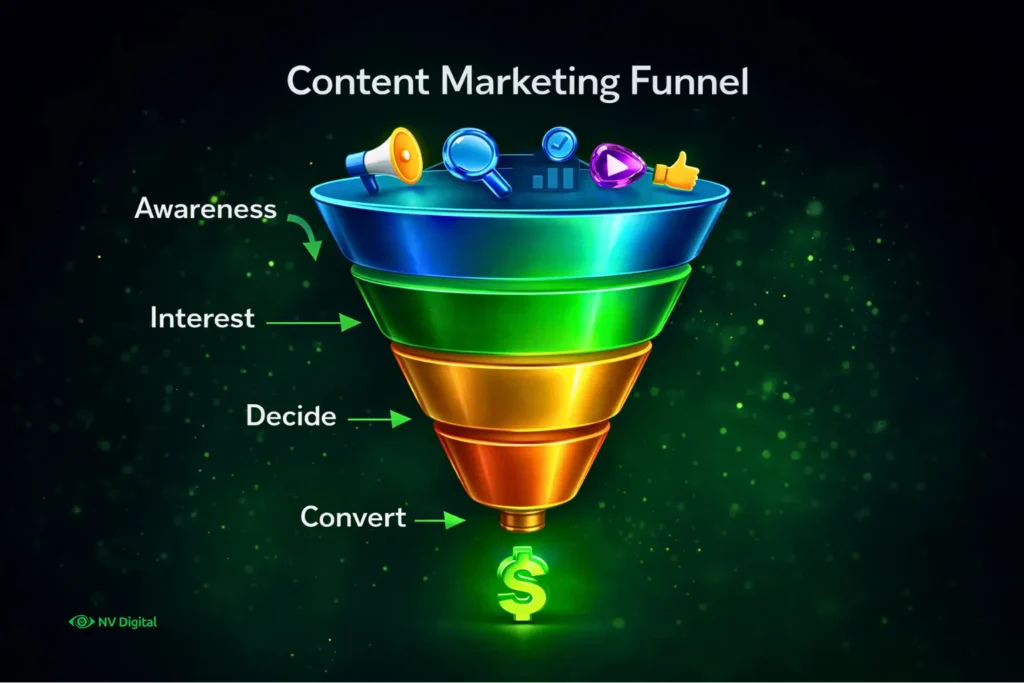
Strong content marketing supports the full buying journey, not just one stage.
Awareness Stage
At this stage, people are just starting to learn. Educational blog posts, beginner guides, and industry insights help them understand the basics. For example, Google provides simple SEO documentation for beginners, which helps new learners get clear answers.
Consideration Stage
Here, people are comparing options. Case studies, comparison articles, and webinars help them evaluate choices and understand what works best. This type of content builds credibility and confidence.
Decision Stage
At the final stage, content should help people make a clear decision. Product pages, demos, and ROI breakdowns explain value and address final concerns. The goal is to guide prospects toward taking action.
For example, Google shares beginner-friendly SEO documentation to help people who are just starting to learn about search. That content attracts early-stage users by answering basic questions clearly.
Common Content Marketing Mistakes
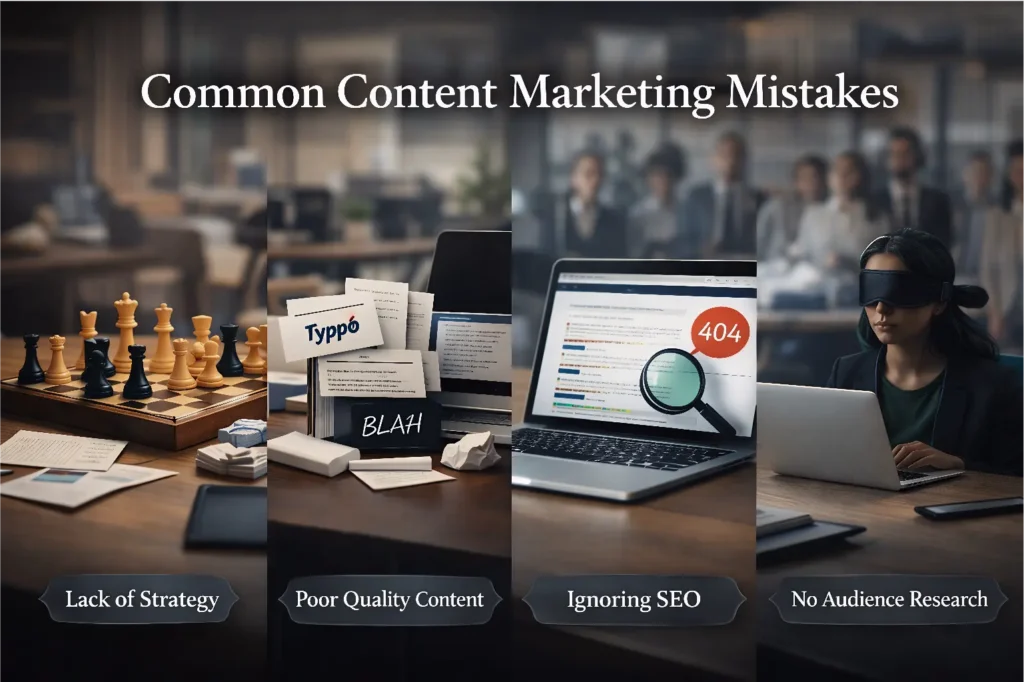
Publishing content without a clear strategy leads to random results. Ignoring search intent means you create content that people are not actively looking for. Writing only for algorithms instead of real readers reduces trust and engagement. Not aligning content with the sales team creates disconnects in the buying journey. Expecting quick results often leads to frustration.
Content marketing is a long-term effort, and it rewards consistency over time.
Real-World Example of Strategic Execution
Look at how Google structures its content ecosystem.
| Stage | Type of Content | Purpose |
|---|---|---|
| Awareness | Educational SEO guides | Help beginners understand how search works and answer basic questions. |
| Consideration | Technical documentation | Provide deeper information for users who want to evaluate options seriously. |
| Decision | Tools like Google Analytics and Google Ads | Offer practical solutions for users who are ready to take action. |
This structured approach supports users at every stage of their journey. It builds trust first and then presents solutions when the user is ready. That is how strategic content marketing works in practice.
FAQ’s
1. What are content marketing strategies?
Content marketing strategies are structured plans used to create and distribute valuable content that attracts the right audience and drives business growth.
2. How do you build a content marketing strategy from scratch?
Start by defining goals, understanding your audience, researching keywords, planning pillar content, choosing distribution channels and tracking performance metrics.
3. Why does content marketing still work in 2026?
Because buyers research before making decisions. Informative content builds trust, answers questions and supports the entire buying journey without relying only on ads.
4. What is the difference between content marketing and content strategy?
Content strategy focuses on planning and structure. Content marketing focuses on using that content to attract, engage and convert customers.
5. What is a B2B content marketing strategy?
A B2B content marketing strategy uses case studies, ROI breakdowns, comparison posts and industry insights to support longer and more complex buying decisions.
Conclusion
Content marketing works best when it is planned properly, measured consistently and connected to clear business goals. It is not about creating more content for the sake of it. It is about building authority in a steady and structured way.
When done right, content becomes a long term asset that continues to bring traffic, generate leads and strengthen brand credibility without relying heavily on paid ads.


0 Comments