

Search is changing fast. People are no longer just clicking links on Google. They’re asking questions and getting direct answers from AI tools like ChatGPT and Google AI. If your business isn’t part of those answers, you’re missing out on visibility.
The good news is, you can improve your chances of being featured. You just need to understand how these systems choose content and what makes them trust certain sources.
What is AI Overview
AI Overview is a feature in Google where users get a direct answer at the top of the search results instead of just seeing website links. It collects information from multiple sources and shows a clear summary for the user.
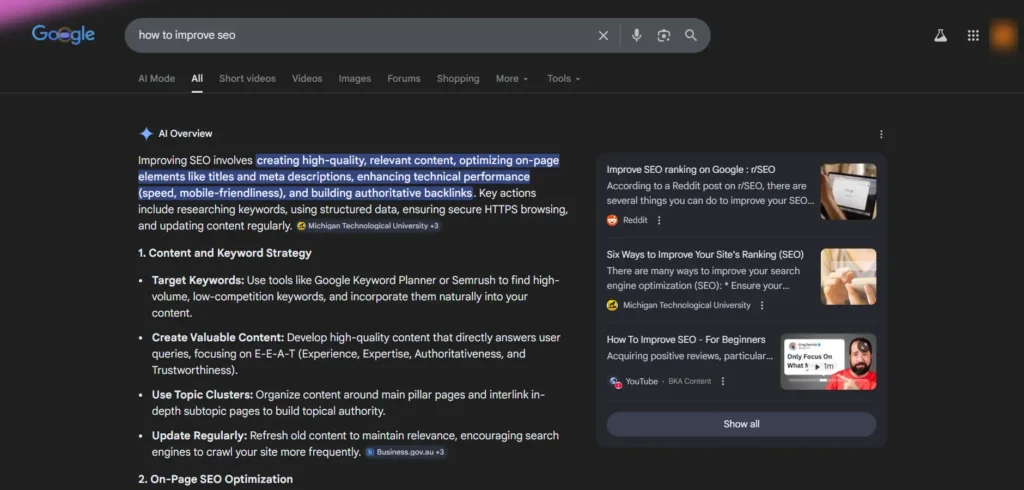
You should understand this because search behavior is changing. People are no longer clicking multiple links. They expect instant answers.
For example, if someone searches “how to improve SEO,” Google may show a short explanation with steps directly on top. That section is called AI Overview.
How AI Overview Works
AI Overview scans different websites and selects content that is clear, structured and trustworthy. It then combines that information into one simple answer.
You should focus on creating content that is easy to understand and well-organized. Avoid writing confusing or unstructured content, because AI may skip it.
For example, content with clear headings, bullet points and direct answers has a higher chance of being selected.
Why AI Overview is Important in 2026
AI Overview gives instant visibility. If your content gets picked, your business appears directly in front of users without them needing to click multiple links.
You should care about this because it increases your reach and builds trust quickly. Avoid ignoring this trend, because traditional SEO alone is not enough anymore.
For example, if your content is included in AI Overview, users may see your brand as a trusted source immediately.
Simple Understanding
Earlier, users searched and clicked different websites to find answers. Now, they get answers directly from AI. This means your goal is not just ranking on Google, but getting your content used in AI answers.
How to Get Your Content into ChatGPT and Other AI Tools
Getting your content into ChatGPT and other AI tools is not about submitting your website directly. These systems pick content based on how clear, useful, and trustworthy it is.
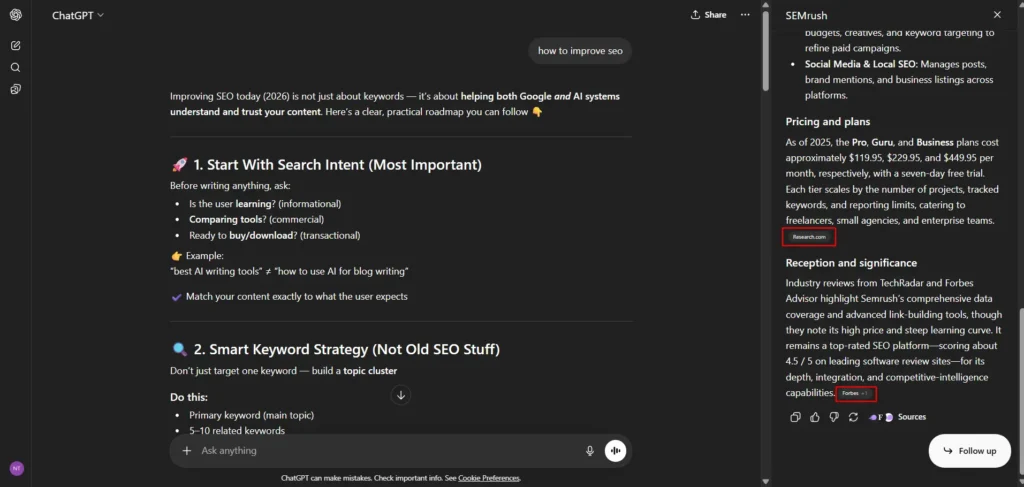
You should focus on creating content that is easy to understand and answers real questions. Avoid writing vague or generic content, because AI prefers clear and direct information.
For example, instead of writing “digital marketing is important,” write “digital marketing helps businesses get more customers through SEO, ads and social media.”
How AI Tools Pick Content
AI tools don’t randomly choose content. They look for content that is well-written, structured and reliable. You should make your content easy to scan and understand. Avoid long, confusing paragraphs without structure.
For example, content with headings, bullet points, and clear explanations is more likely to be used than plain text.
What You Should Do
To increase your chances of getting picked by AI tools, you need to follow a few simple things. Write clear answers, focus on one topic and add real examples wherever possible. Also, make sure your content is updated and relevant.
For example, if you are explaining SEO, include steps, examples, and real use cases instead of just theory.
What You Should Avoid
Avoid writing content that is too generic, copied or filled with keywords. AI systems can easily ignore low-quality content.
For example, repeating the same keyword again and again without adding value will not help your content get picked.
Where Your Content Gets Picked From
AI tools usually pick content from websites that are already trusted and well-structured. You should focus on building authority by publishing consistent and useful content. Avoid expecting results from one single blog post.
For example, websites with multiple high-quality articles on a topic are more likely to be referenced.
How to Get Your Link and Images in AI Overview
To get your link in the AI Overview source section, your content needs to be clear, direct and easy to understand. Google usually picks pages that answer the question quickly without unnecessary introductions, so you should always give a straight answer first and then explain it in detail. Your content should also be well-structured with headings, short paragraphs and proper formatting, because AI prefers content that is easy to scan. At the same time, building trust is important, so regularly publishing useful content and covering topics in depth increases your chances of getting picked.
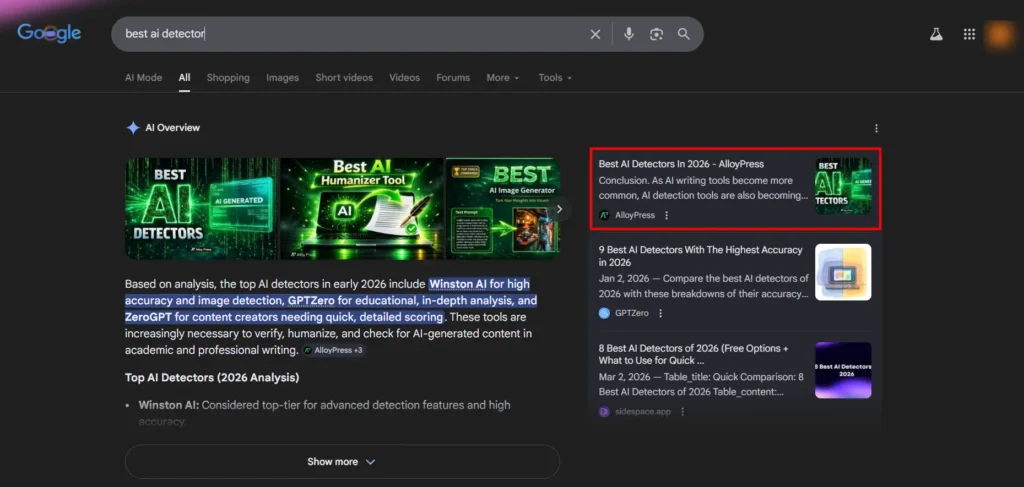
For images, you need to use relevant and high-quality visuals that match your content. Make sure your images are properly optimized by using clear file names and descriptive alt text and place them near the related content instead of randomly adding them. For example, if you are explaining steps, include an image that visually shows those steps right below the section.
In simple terms, clear and well-structured content helps your link get featured and properly optimized, relevant images increase your chances of appearing in AI Overview results.
How to Make Your Content AI-Friendly:
Creating AI-friendly content is important today because search engines now focus on understanding meaning, context and intent, not just keywords. To improve your chances of being picked up by AI systems, write clear, simple and valuable content for humans first, then optimize it for AI.
Structure your content well using clear headings, short paragraphs and lists so it’s easy to read and understand. Add depth by including examples, data and complete explanations instead of surface-level info. Use natural language with related terms and focus on user intent.
On the technical side, use schema markup to help search engines understand your content better. Keep your content updated add relevant media with proper descriptions and make everything accessible.
In short, clear writing, strong structure, useful depth and regular updates help your content perform better in AI-driven search.
1. Write clear and helpful content
This means your content should be easy to understand and straight to the point. Don’t confuse the reader with complex words or long explanations. Just answer what they are looking for clearly. You should use this when explaining any topic, especially basics or definitions. Avoid adding unnecessary fluff or over-explaining simple things. For example, if someone searches “what is SEO,” don’t start with a long story about digital marketing. Simply explain what SEO is in a clear sentence first, then add details if needed.
2. Focus on one topic at a time
Each piece of content should focus on one main idea. This helps both readers and AI understand your content better. Use this when you are creating blogs, landing pages or guides. Don’t mix multiple topics in one article, as it becomes confusing and less useful. For example, instead of writing one article about “SEO, social media and email marketing,” create separate content for each topic like “how SEO works” or “how to grow on Instagram.”
3. Build trust and authority
Your content should show that you know what you’re talking about. This builds trust with both users and AI systems. Use this by sharing real insights, examples or experiences. Avoid copying generic content without any value. For example, instead of just saying “SEO helps ranking,” you can say “we improved a website’s traffic by 40% using SEO,” which sounds more real and trustworthy.
4. Structure your content properly
Good structure makes your content easy to read. Use headings, short paragraphs and lists to organize information. You should follow this in every blog or article you write. Avoid writing everything in one long paragraph because people won’t read it. For example, break your content into sections like “steps,” “tips,” or “examples” so readers can quickly scan and understand.
5. Add depth and real value
Your content should not be basic or surface-level. Go deeper and explain things properly so the reader gets real value. Use this when you want your content to stand out. Avoid writing very short or generic explanations that don’t help. For example, instead of saying “content marketing is important,” explain why it matters, how it works and maybe include a real use case.
6. Use natural language
Write like how you normally talk. This makes your content feel more human and easier to connect with. Use simple and natural sentences instead of forcing keywords again and again. Avoid keyword stuffing because it looks unnatural. For example, instead of repeating “best SEO tips” many times, you can say “ways to improve your SEO” or “how to rank better.”
7. Keep your content updated
Your content should stay relevant over time. Update it regularly with new information or examples. Use this especially for blogs related to trends or tools. Avoid leaving outdated information because it reduces trust. For example, if you wrote about “top tools in 2023,” update it with the latest tools and insights.
8. Use structured data (schema)
This helps search engines understand your content better behind the scenes. You should use this on your website, especially for blogs, products or reviews. Avoid ignoring this if you want better visibility in search results. For example, adding article schema tells Google about your content, author and publish date, which can improve how it appears in search.
9. Optimize beyond text
Your content should not be only text. Adding images or videos makes it more engaging and easier to understand. Use this when explaining steps or complex ideas. Avoid using plain text everywhere without any visuals. For example, if you’re explaining a process, include an image or short video to support your explanation.
FAQs
1. Why is my content not showing in AI results?
Most of the time, it’s because the content is either too generic, poorly structured or not clear enough. AI prefers content that directly answers questions and is easy to understand. If your content is vague or cluttered, it gets ignored.
2. Do I need technical SEO or schema to get featured?
It helps, but it’s not the main thing. Good content always comes first. Even without schema, clear and well-structured content can get picked. Schema just gives an extra boost.
3. Is keyword stuffing still important for ranking?
No, not anymore. AI focuses more on meaning and context rather than repeated keywords. Writing naturally with clear intent works much better than forcing keywords everywhere.
4. How long does it take to get featured in AI results?
There’s no fixed time. It depends on your content quality, consistency and trust signals. Some content gets picked quickly, while others take time to build authority.
5. Can small businesses compete with big brands in AI results?
Yes, they can. AI doesn’t only prefer big brands. If your content is clear, focused and genuinely helpful, you still have a strong chance to get featured.
Conclusion
AI search is changing how people find information and the way content works is also evolving. But the core idea is still simple. If your content is clear, useful and easy to understand, it will perform better.
You don’t need complicated tricks or shortcuts. Focus on helping your audience, structure your content properly and keep improving it over time. When you do this consistently, your chances of getting featured in AI results will naturally increase.

0 Comments