

If someone said a language learning app would turn into a pop culture icon, most people would not take it seriously.
Today, Duolingo is not just an education app. It is a brand people meme about, share on social media and talk about without being forced to.
So how did it grow into a billion dollar company?
Let’s break it down clearly, step by step, looking at the real product experience and the psychology behind its design decisions.
Table of Contents
What Is Duolingo? (Quick Overview)
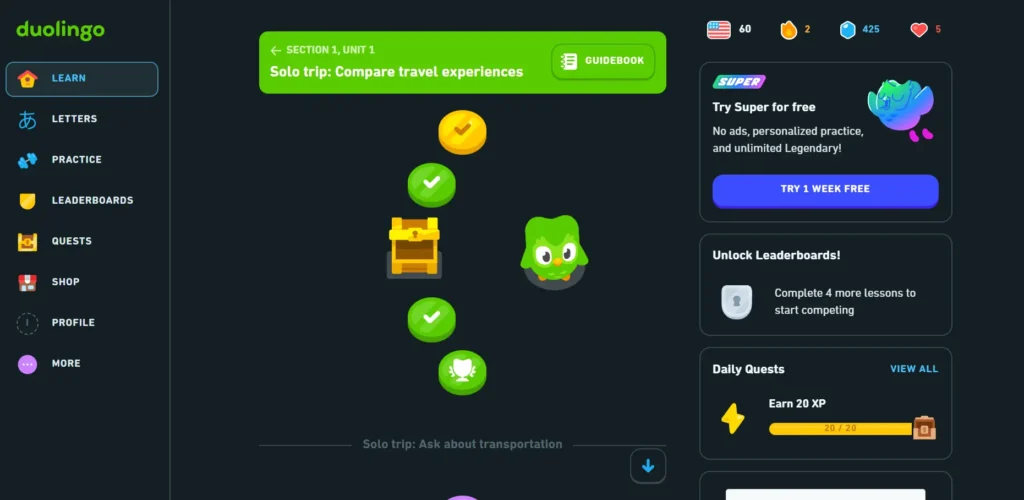
Duolingo is a language learning platform founded in 2011 by Luis von Ahn and Severin Hacker. From the beginning, the idea was straightforward: make education free, accessible to anyone with an internet connection, and engaging enough to become a daily habit.
Over time, the platform expanded beyond languages into music and math, but it stayed true to its core strength which is gamified learning that keeps users coming back consistently.
Duolingo Revenue & User Growth (2011 – 2026)
| Year | Revenue (USD) | Monthly Active Users | Daily Active Users | Notes |
|---|---|---|---|---|
| 2011 | Pre-revenue stage | Early beta users | — | Company founded |
| 2012 | Minimal / Not publicly disclosed | Growing early users | — | App officially launched |
| 2013 | Not publicly disclosed | Rapid organic growth | — | Free model scaling |
| 2014 | Not publicly disclosed | Tens of millions cumulative users | — | Product expansion phase |
| 2015 | Not publicly disclosed | Strong global adoption | — | Pre-monetization scale |
| 2016 | ~$1M | Not disclosed | Not disclosed | Monetization begins |
| 2017 | ~$13M | Not disclosed | Not disclosed | Subscription model grows |
| 2018 | ~$36M | Not disclosed | Not disclosed | ~1M paid users milestone |
| 2020 | ~$137M | ~48M | ~20M+ | Pandemic growth surge |
| 2021 | ~$251M | ~60M+ | ~26M+ | Strong paid growth |
| 2022 | ~$365M | ~75M+ | ~32M+ | Scaling globally |
| 2023 | $531M | ~88M+ | ~36M+ | Consistent growth phase |
| 2024 | $748M | ~103M+ | ~40M+ | Major expansion |
| 2025 | ~$1B | 116–135M | 50M+ | Crossed 50M DAU |
| 2026 | $1.2B+ (Projected) | Growing | Target: 100M DAU | User expansion focus |
Duolingo in 2026: Current Growth and Market Position
Duolingo is now a publicly traded company with a market cap of over 5 billion dollars. It generates around 960 million dollars in annual revenue and reports roughly 380 million dollars in net income.
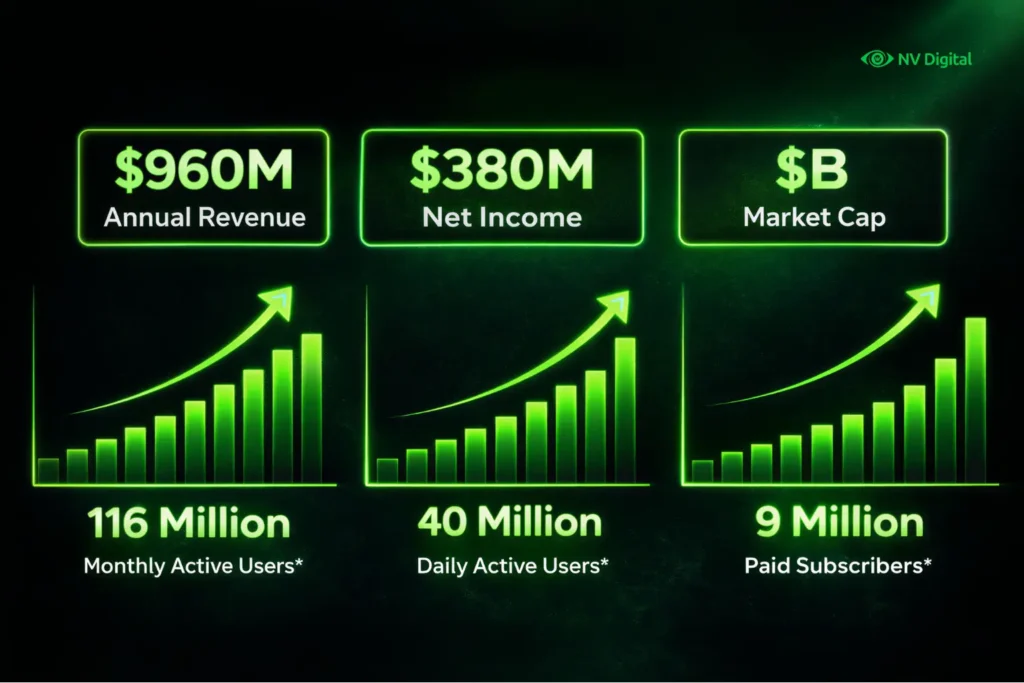
The platform has more than 116 million monthly active users, over 40 million daily active users, and more than 9 million paid subscribers.
This is no longer small startup growth. This is what structured and sustained scaling looks like.
Real User Experience: How Duolingo Feels in Action
Real Experience in Duolingo – live video
Inside the App: Why Users Keep Coming Back
When you use the app, a few things become clear immediately. The lessons are short and easy to finish, and you receive instant feedback after every answer. You earn XP points, see visual rewards, and the app keeps track of your daily streak. The interface is clean, simple, and free from unnecessary distractions.
This is where Duolingo’s growth truly begins. The app does not overwhelm users with complexity. Instead, it focuses on small, consistent wins and rewards every bit of progress.
The experience follows a clear psychological loop. You start a lesson, complete it, earn a reward, maintain your streak, and feel a sense of achievement. This simple cycle builds a strong habit.
That habit is the real foundation of Duolingo’s marketing strategy. When users return every day, the product starts driving its own growth because strong retention naturally turns into organic promotion.
Website Experience: Design That Sells Without Selling
A screen recording of the Duolingo webpage that highlights its creative and engaging design.
Website Design Psychology: Simple, Playful, Non-Intimidating
When you watch the website walkthrough video, one thing becomes clear: there is no aggressive sales pressure. Instead, the experience focuses on friendly visuals, clear calls to action, bright and positive colors, simple navigation, and a clear value proposition.
This approach strongly supports Duolingo’s branding strategy. The brand feels friendly, approachable, modern, and slightly playful. The website reflects the same personality as the app, creating a consistent experience across platforms.
That consistency builds trust, and trust ultimately drives conversions.
Now Let’s Reveal the Duolingo Marketing Strategy
After watching both videos, the strategy becomes much clearer, as it is evident that Duolingo did not rely heavily on paid advertising but instead built its growth around four strong core pillars.
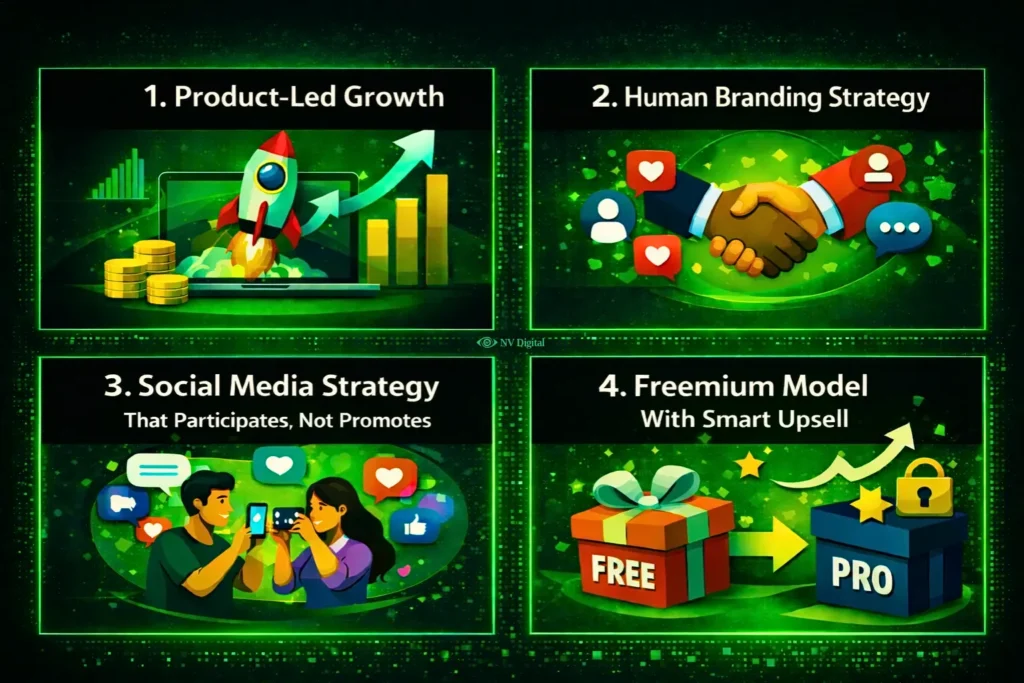
1. Product-Led Growth (Retention First)
The real Duolingo growth strategy starts inside the product itself, where the company focuses on daily habit formation, behavioral psychology, gamification, and emotional triggers, while marketing simply amplifies what the product is already designed to do effectively.
2. Human Branding Strategy
The Duolingo branding strategy is built around personality, with Duo the owl positioned as relatable, self-aware, and deeply connected to internet culture. This strong and distinct personality encourages users to engage voluntarily. People rarely share advertisements, but they willingly share personality.
3. Social Media Strategy That Participates, Not Promotes
The Duolingo social media strategy works because it reacts quickly to trends, creates content that feels native to each platform, encourages tagging and commenting, and uses humor in a strategic way. Instead of constantly pushing product features, the brand focuses on building cultural presence and staying relevant in online conversations.
4. Freemium Model With Smart Upsell
Free access builds trust with users, consistent habits create emotional attachment, and the premium version naturally becomes a logical upgrade over time, making it a smart and sustainable long-term monetization strategy.
What We Can Learn and Apply in Our Business
Here’s where this becomes practical.
| Duolingo Approach | What It Means | How You Can Apply |
|---|---|---|
| Retention Focus | Build daily habit | Add repeat triggers in your product |
| Gamification | Reward behavior | Use milestones & micro rewards |
| Personality Branding | Human voice | Define clear brand tone |
| Social Participation | Engage culture | Comment, react, interact |
| Consistent UX | Same tone everywhere | Align product + website + content |
You do not need billions to succeed; you need clarity in your strategy and consistency in your execution.
FAQ’s
What makes Duolingo marketing strategy different?
It combines behavioral design, cultural relevance and product-led growth rather than relying purely on paid campaigns.
How did Duolingo become a billion dollar company?
By focusing on retention, community engagement, freemium monetization and consistent branding.
Can small businesses copy Duolingo strategy?
You cannot copy the scale, but you can apply the principles – habit design, personality and audience participation.
Is Duolingo’s social media strategy risky?
Yes. But controlled risk builds relatability. Safe content rarely goes viral.
Conclusion
Duolingo did not become a billion-dollar brand by being the loudest. It became successful because the product builds daily habits, the brand feels human, the social media presence feels active and fun, and the overall experience stays consistent everywhere.
After watching the app demo and the website walkthrough, one thing is clear: Duolingo’s marketing is not just about promotion. It is about designing a smart and engaging user experience.
Bottom Line
If you want to grow your business, do not just run ads. Create something people genuinely want to come back to. Give your brand a clear personality. Join culture in a natural way instead of forcing promotion. Make your users so satisfied that they talk about you on their own. That is the real lesson from Duolingo.

0 Comments