

Selling inside one country is one game. Selling across borders is a completely different league. New customers, new rules, new expectations and new risks.
In 2026, selling products to other countries is not just for big companies. Even small brands can sell to customers around the world and make money.
But going global is not just about turning on international shipping. It works only when you plan it properly.
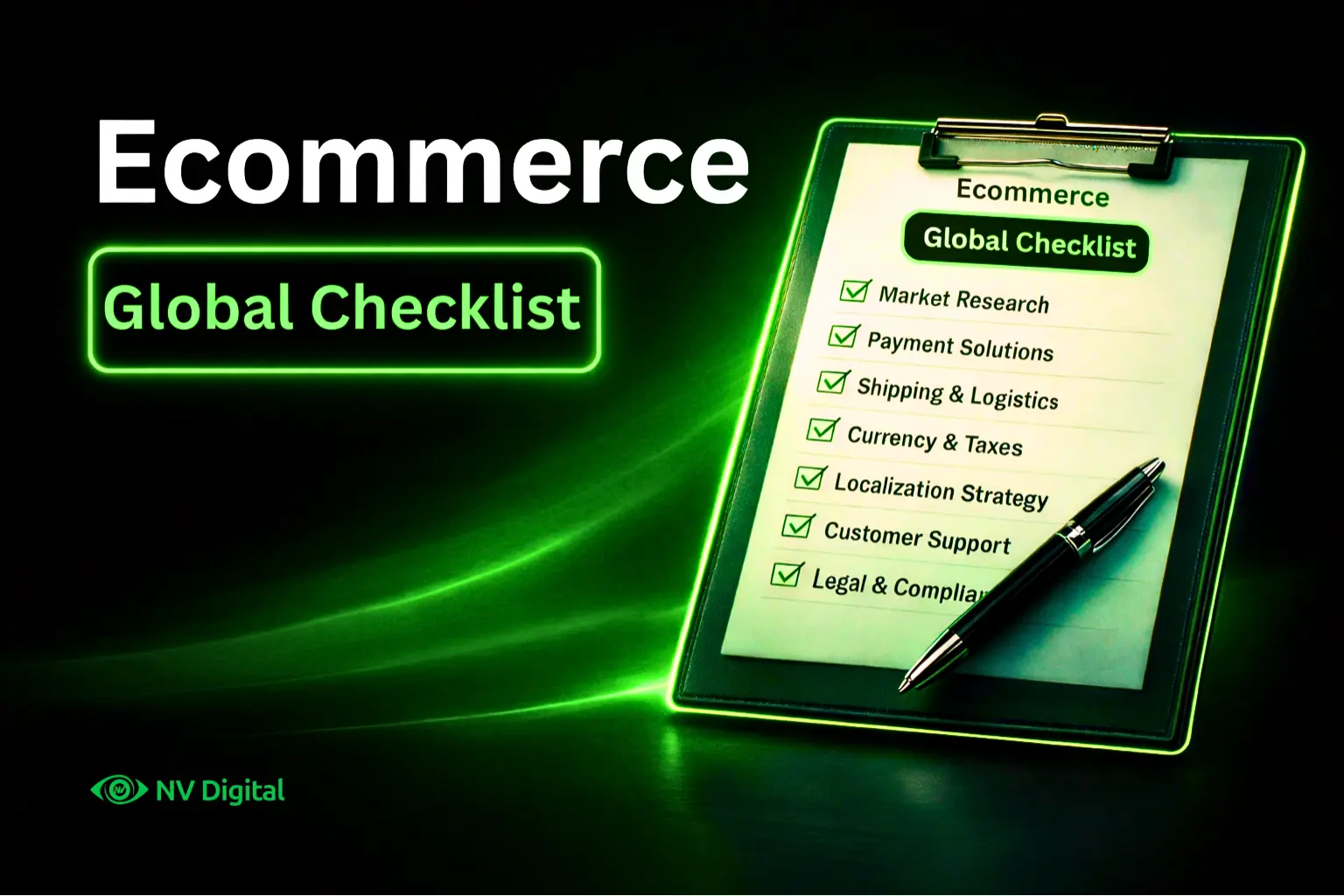
Before we go deeper, here is a simple checklist you can quickly look at in under a minute.
Table of Contents
Why You Need a Global Ecommerce Checklist
When companies like Amazon and Shopify enter new markets, they adjust everything, including currency, payments, shipping, and checkout experience.
Global ecommerce is not about copying the same setup into another country. It requires proper changes based on that market.
Without a checklist, businesses often face payment issues, shipping delays, tax confusion, high return rates, and low trust from new customers.
This guide is meant to help you avoid those problems.
Ecommerce Global Checklist (Complete Breakdown)
Below is a structured table covering all essential areas.
| Category | What To Check | Why It Matters | Action Steps |
|---|---|---|---|
| Market Research | Demand in target country | Not all products sell equally everywhere | Use Google Trends, competitor analysis |
| Currency | Local currency display | Builds trust, reduces friction | Enable auto currency conversion |
| Payment Methods | Country-specific payment options | Many countries avoid credit cards | Add PayPal, local wallets, BNPL |
| Taxes & Duties | VAT, GST, import duties | Unexpected fees kill conversions | Show landed cost at checkout |
| Shipping | Delivery time & cost | Long delays reduce repeat purchases | Partner with reliable carriers |
| Returns | International return policy | Complicated returns hurt trust | Offer local return hubs if possible |
| Language | Website translation | Native language increases conversion | Use professional localization |
| Cultural Adaptation | Product positioning | Colors, symbols differ by culture | Adjust creatives & messaging |
| Legal Compliance | Data privacy laws | Fines and legal risk | Check GDPR or country laws |
| Customer Support | Time zone coverage | Slow response reduces trust | Provide 24/7 or region-based support |
Global Payment Preferences (By Region)
Different regions prefer different payment systems.
| Region | Preferred Payment Methods |
|---|---|
| USA | Credit cards, PayPal |
| Europe | Debit cards, Klarna, SEPA |
| India | UPI, wallets, COD |
| China | Alipay, WeChat Pay |
| Latin America | Installments, local cash vouchers |
If you only accept international credit cards, you automatically lose customers in many countries.
1. Validate Demand Before Expanding
Do not assume your product will sell in every country. That is how brands waste money. Look at the data first.
Check where your website traffic is coming from. See if visitors from other countries are adding products to their cart. Look at organic keyword demand in those regions. Study whether your competitors are already shipping there.
If you notice people from Canada visiting your site, spending time, and exploring products, that is not random. That is early demand. Pay attention to it and use it before someone else does.
2. Understand Local Buying Behavior
Every country is different. What works in one market may not work in another.
Take time to understand how people in that region actually shop. Find out which payment methods they trust. Check whether most users buy through mobile or desktop. Understand how fast they expect delivery and how they view refunds and returns.
For example, many European customers expect to see clear VAT included in the price. In several Asian markets, most purchases happen on mobile, so the checkout experience must be smooth on smaller screens.
Localization is not just about changing the language. It is about adjusting the entire shopping experience to match how people in that country think and buy.
3. Currency & Pricing Strategy
Always display prices in the customer’s local currency. Decide whether you will use fixed exchange rates or live currency conversion. Choose between duties paid shipping and unpaid shipping. Recalculate your margins after adding international shipping, taxes, and handling costs.
If customers face unexpected customs charges at delivery, you lose trust immediately.
4. Shipping & Logistics Planning
Shipping directly affects whether customers buy from you again. Before you launch in a new country, calculate the average shipping cost for that market. Estimate delivery time realistically, not optimistically. Test whether tracking works properly. Make sure customs documents are accurate and complete.
If your order volume starts increasing, consider setting up regional fulfillment centers to reduce delivery time and lower costs.
5. Legal & Tax Compliance
Every country has its own tax limits and legal requirements. Check whether you need VAT registration. Confirm if GST applies to your product. Review import restrictions and any product specific compliance rules.
Ignoring these rules does not just lead to penalties. It can result in your shipments being held or rejected at customs.
6. Payment Gateway Compatibility
Make sure your payment system can handle multiple currencies and accept local payment methods used in that country. It should also have strong fraud detection in place.
Fraud rates in international transactions can be very different from domestic ones, so having proper protection is essential.
7. Website Localization
At a minimum, create a country specific shipping page, provide clear return instructions, add localized FAQs, and clearly explain duties and extra charges. If possible, use country based subfolders on your website to improve international SEO and make your structure clear for both users and search engines.
8. International SEO Setup
Search visibility is different in every country, so you need to set it up properly. Implement hreflang correctly, write country specific meta titles, target localized keywords, and build backlinks from local websites. If you skip this, Google may show the wrong page to the wrong audience, and your traffic will suffer.
9. Customer Support Preparation
Customers expect quick responses, even if they are in a different time zone. Set a clear response time commitment. Use email automation to handle common international queries. Expand your FAQs to cover shipping and customs questions. Clear and timely communication reduces confusion and prevents disputes.
10. Returns & Refund Framework
International returns are expensive, so plan this before you expand. Decide who will pay for return shipping. Calculate reverse logistics costs. Consider offering partial refunds when it makes sense. Clearly explain refund timelines to customers. A transparent return policy helps reduce chargebacks and protects your margins.
11. Marketing Strategy for New Regions
Start small and validate before you scale. Test by retargeting international visitors, collaborating with local influencers, using geo specific ad creatives, and running small budget ad campaigns. Only increase your investment when real conversion data proves the market is working.
12. Monitor Unit Economics Closely
Revenue growth is useless if your margins shrink. Track customer acquisition cost by country, shipping cost differences, payment processing fees, refund rates, and net profit after tax and duties. International expansion should increase overall profitability, not just boost revenue numbers.
13. Start With Controlled Expansion
Do not launch in multiple countries at the same time. Start with one stable and predictable market. Then choose one high potential growth market. Test, optimize what works, fix what does not, and expand step by step.
Interesting Global Ecommerce Facts
Cross border ecommerce will make up more than 20 percent of total online sales worldwide. People are twice as likely to buy when they see prices in their own currency. About 56 percent of shoppers prefer websites in their own language. Showing taxes and duties clearly at checkout also helps reduce cart abandonment.
Global Ecommerce Expansion Funnel (Visual Representation)
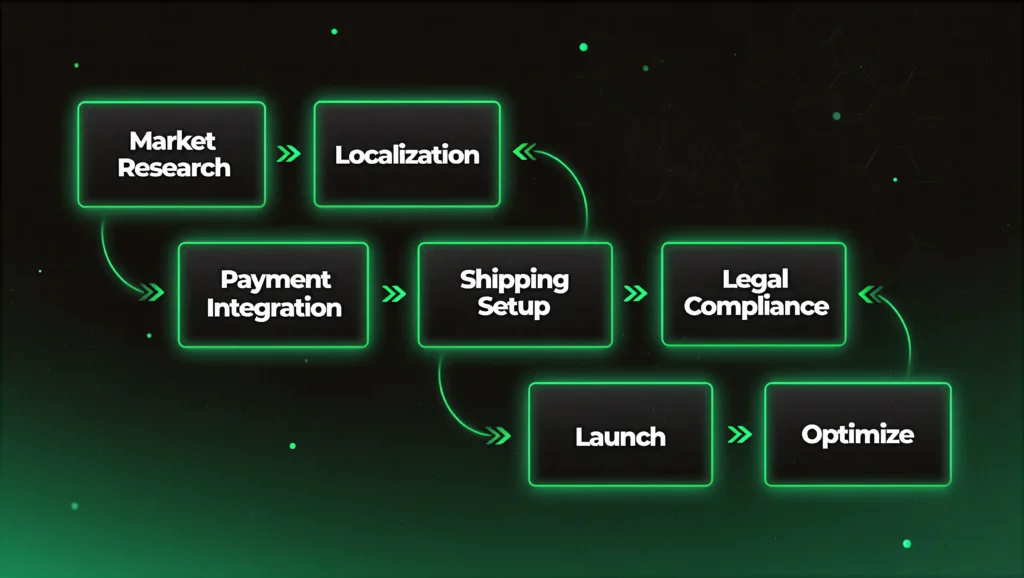
Market Research → Localization → Payment Integration → Shipping Setup → Legal Compliance → Launch → Optimize
Each step builds trust. Skipping steps reduces conversion rate.
Common Mistakes in Global Ecommerce
Many brands fail in global ecommerce because they make simple mistakes. They think English is enough, they do not show the full cost clearly, they ignore local holidays, they use the same ads in every country, and they respond slowly to customers.
Most global expansion failures do not happen because there is no demand. They happen because the buying experience becomes difficult for customers.
FAQ’s
1. What is an ecommerce global checklist?
It is a structured list of requirements to review before expanding your online store into international markets.
2. Do I need to translate my entire website?
If targeting non-English speaking markets, yes. Localization increases trust and conversions.
3. What is the biggest challenge in cross border ecommerce?
Taxes, shipping costs and payment compatibility are the most common operational challenges.
4. Should I open local warehouses?
If you see consistent demand from a region, local fulfillment reduces shipping time and cost.
5. How do I test a new country before full expansion?
Start with paid ads targeting that country, enable local currency, and monitor demand before scaling logistics.
Final Thoughts
Global ecommerce can accelerate growth, but only if you execute it with discipline.
This checklist is not about doing everything at once. It is about entering each new market with preparation and clarity.
Plan properly. Launch carefully. Scale in a way that protects your margins and long term growth.



0 Comments